Reitam: The Super Clean Sans Serif That Balances Warmth and Precision
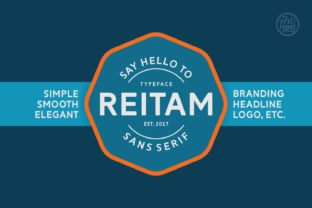
Typography is everywhere. It sets the mood for a brand, guides a reader through an interface, and often determines whether someone stays on a page or clicks away. Among the countless sans serif options available today, one typeface stands out for its quiet confidence and remarkable versatility: Reitam. This super clean sans serif font brings something rare to the table—it manages to be both highly legible and genuinely approachable, thanks to its soft, rounded corners that make every character feel friendly rather than cold.
If you have ever struggled to find a typeface that works equally well for a bold headline and for dense body text, or one that transitions effortlessly from a website to a printed brochure, Reitam deserves a close look. It is a font designed with real-world use in mind, and its qualities go far beyond surface-level aesthetics.
What Makes Reitam Different from Other Sans Serif Fonts
Most sans serif fonts fall into one of two camps: they are either strictly geometric and somewhat rigid, or they are highly stylized and difficult to read at small sizes. Reitam avoids both extremes. Its clean lines and precise proportions give it a modern, minimal appearance, while the rounded terminals and soft corner details inject a sense of warmth that is often missing in minimalist typography.
The rounded corners are not just decorative. They serve a functional purpose: they soften the visual impact of the typeface, making it easier on the eyes during extended reading sessions. This is particularly valuable for digital interfaces where users scroll through paragraphs of text. The curves reduce the harshness of sharp angles, creating a visual rhythm that feels natural and unobtrusive.
Another distinguishing factor is the font's super legibility across formats. Whether you view Reitam on a high-resolution Retina display, a budget laptop screen, or a printed page, the character shapes remain clear and distinct. There is no loss of detail at small sizes, and no awkward spacing issues at large sizes. This consistency is a hallmark of well-crafted type design, and Reitam delivers it reliably.
Why Legibility Matters More Than You Think
Legibility is often treated as a checkbox item—either a font is readable or it is not. But in practice, legibility exists on a spectrum. A font that is merely readable at 16 pixels might cause fatigue when used for an entire article. A font that looks clean in a headline might become muddy in a paragraph. Reitam sidesteps these problems by maintaining its clarity across the full range of typical use cases.
For body text, the open counters and generous spacing prevent characters from blending together. The lowercase letters are carefully balanced so that words form recognizable shapes rather than requiring the reader to decode each letter individually. This might sound like a small detail, but it dramatically affects reading speed and comprehension, especially on screens where pixel density varies.
Headlines, on the other hand, benefit from Reitam's uniform stroke weights and confident forms. Even at large sizes, the font retains its friendly character without becoming cartoonish or overly aggressive. The rounded corners become more noticeable at scale, adding a subtle personality that invites attention rather than demanding it.
Reitam in Web Design: A Natural Fit for Modern Interfaces
Web designers face a constant tension between aesthetics and performance. A font that looks beautiful but loads slowly or renders inconsistently across browsers is not practical. Reitam is designed with web use in mind. Its clean geometry compresses efficiently for web font formats, and its letterforms remain stable across different rendering engines.
Because the font is super clean and uncluttered, it pairs well with both minimal layouts and more complex designs. You can use Reitam as your primary typeface for an entire website without worrying about visual fatigue. The friendly rounded corners make it especially suitable for:
- User interfaces and dashboards where clarity and approachability are critical
- E-commerce sites where product descriptions and prices need to be instantly legible
- Blog and editorial platforms where long-form reading is the norm
- Landing pages and marketing sites where headlines need to grab attention without feeling harsh
Another practical advantage is how well Reitam handles different font weights. From light to bold, each weight maintains the same essential character. A thin weight works beautifully for elegant navigation menus or subtle captions, while the bold weight commands attention in calls to action without losing the font's inherent warmth. This weight consistency means you can build a complete typographic system around a single typeface, which simplifies design workflows and ensures visual harmony across an entire site.
Print Applications: Where Reitam Really Shines
While many modern fonts are designed primarily for screens, Reitam is equally capable in print. The rounded corners that make it friendly on a monitor also help it perform well on paper, where ink bleed and subtle registration issues can degrade fine details. The font's generous spacing and open shapes prevent text from becoming cramped or muddy in print, even at small point sizes.
For business cards, brochures, and packaging, Reitam offers a polished yet approachable look that works across industries. A tech startup might use it for a clean, modern brand identity. A children's book publisher might choose it for its soft, inviting feel. A corporate annual report could rely on it for clear, professional communication. This versatility is rare in sans serif fonts, which often lean heavily toward either formal or casual.
One scenario where Reitam excels is in multi-page documents that combine headlines, subheadings, captions, and body text. The typeface's consistent personality ties all the elements together, creating a cohesive reading experience. Because the font does not rely on novelty or extreme stylistic features, it ages well—a brochure printed today will still look current years from now.
Practical Considerations Before Choosing Reitam
No font is perfect for every situation, and Reitam is no exception. Understanding where it works best—and where it might not—helps you make an informed decision.
When Reitam is an excellent choice:
- Projects that require a clean, modern, and friendly tone
- Long-form digital content where reader comfort is a priority
- Brand identities that need to feel approachable yet professional
- Multi-device or multi-format projects where consistency matters
- Interfaces or documents that use multiple font weights
When you might consider alternatives:
- Projects that demand a very formal, traditional, or authoritative look (a legal document or academic journal might prefer a serif)
- Designs where extreme personality or novelty is the goal (Reitam is intentionally understated)
- Very small text sizes below 10 pixels or 6 points, where any rounded font can lose some sharpness
These are minor limitations, and they apply to virtually any typeface. For the vast majority of web and print projects, Reitam offers a compelling balance of readability, warmth, and flexibility.
How to Get the Most Out of Reitam
Once you decide to use Reitam, a few best practices can help you maximize its strengths. First, take advantage of the font's weight range. Use a lighter weight for body text and a heavier weight for headlines, rather than relying on size alone to create hierarchy. This approach leverages the typeface's natural rhythm and prevents the design from feeling monotonous.
Second, pay attention to spacing. Reitam's rounded corners create a sense of openness, so you can often use tighter tracking for headlines without losing legibility. For body text, standard or slightly increased letter spacing can enhance readability, especially on screens with lower resolution.
Third, consider pairing Reitam with a complementary serif font for contrast. A classic serif for pull quotes or long-form articles can create a nice tension with Reitam's clean sans serif structure. But Reitam is also strong enough to stand alone as a single-typeface solution for most projects.
The Role of Reitam in Contemporary Design Workflows
Designers today work across multiple mediums—web, mobile, print, social media, and sometimes even motion graphics. A font that behaves predictably across all these contexts saves time and reduces headaches. Reitam fits this modern workflow naturally. Its web font files are optimized for quick loading, its print output is crisp, and its personality remains consistent whether it appears on a billboard or a smartwatch screen.
For teams collaborating on brand projects, having a single typeface that handles such a wide range of applications simplifies asset management. There is no need to juggle separate fonts for headlines and body text, or for web and print. Reitam's unified design language means that everyone on the team—from graphic designers to front-end developers—works with the same set of character shapes and proportions.
Freelancers and solo designers will also appreciate the font's adaptability. When you handle every aspect of a project yourself, from logo design to website development, you need tools that reduce complexity without compromising quality. Reitam delivers exactly that: a typeface that you can rely on for the entire project lifecycle.
Final Observations on Reitam's Everyday Value
At the end of the day, a typeface is a tool. And like any good tool, the best ones are the ones you barely notice because they work so well. Reitam is that kind of font. It does not shout for attention, but it quietly elevates every project it touches. Its rounded corners make it easy to like, but its technical craftsmanship makes it easy to trust.
Whether you are designing a brand identity, building a website, laying out a magazine, or creating a presentation, Reitam offers a reliable foundation. It is a super clean sans serif that understands the value of friendliness without sacrificing professionalism, and legibility without sacrificing personality. That combination is harder to find than most designers realize—and once you start using Reitam, you will probably wonder how you managed without it.