Lenis: A Strategic Approach to Choosing an Elegant Sans Serif Font That Works Across Contexts
Typography decisions rarely receive the strategic attention they deserve. Many professionals select a typeface based on aesthetics alone, only to discover later that their choice creates friction in readability, brand consistency, or cross-platform performance. Lenis enters this conversation as an elegant sans serif font that prioritizes legibility without sacrificing visual refinement. But understanding what Lenis offers is only the first step. The real value emerges when you align its characteristics with your specific goals, workflows, and audience needs.
This article examines Lenis from a practical, decision-oriented perspective. Rather than simply praising its design, we explore how and why it might serve your projects, what to evaluate before adopting it, and how to use it with intention rather than impulse.
Understanding Lenis as a Design Decision
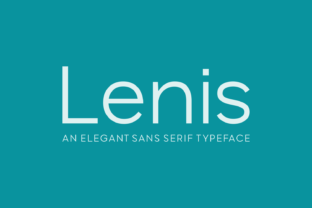
Lenis belongs to the category of sans serif typefaces, but its specific design choices set it apart. It is not a neutral geometric font nor an abstract display type. Instead, it balances clean lines with subtle humanist touches, making it approachable without appearing informal. The letterforms are open, spacing is generous, and the overall rhythm supports sustained reading.
From a strategic standpoint, this means Lenis can function across multiple roles. It scales well, which is a technical claim with real implications: a headline set at 72 points retains the same clarity and personality as body text at 14 points. That kind of consistency reduces the need for multiple typefaces and simplifies your design system. For entrepreneurs, marketers, and creators who manage limited resources, this efficiency matters.
The font is optimized for both web and print. In an era where most content lives online but still appears in PDFs, presentations, or collateral, a typeface that performs equally well in both environments eliminates a common source of compromise. You do not need to choose between a font that looks good on screen and one that prints cleanly. Lenis offers a single solution.
Why Legibility and Scalability Matter for Real Outcomes
Legibility is often discussed as a subjective preference, but it has measurable effects on user experience. When people can read without strain, they stay engaged longer, absorb more information, and form more positive impressions of the content and the brand behind it. For bloggers, publishers, and educators, this translates directly into better retention and trust. For small business owners and decision-makers, it means clearer communication with customers and stakeholders.
Lenis is designed with legibility as a core constraint. The x-height is generous without being exaggerated, which aids readability at small sizes. The distinctions between similar characters, such as lowercase l and uppercase I, are clear enough to prevent confusion. These details may seem minor, but they accumulate over thousands of words of reading.
Scalability adds another layer of strategic value. A font that works at multiple sizes reduces the cognitive load on your audience. Whether someone reads your website on a phone, scans a printed brochure, or watches a presentation projected on a wall, the typeface maintains its integrity. This consistency supports brand recognition and reduces the friction of switching between contexts. For professionals who produce content across channels, this is not a luxury — it is a practical necessity.
Aligning Typography with Communication Goals
Every piece of content serves a purpose. Whether you are explaining a complex concept, convincing a prospect to take action, or building long-term brand affinity, typography either supports or undermines that goal. Lenis, with its calm and refined presence, works particularly well when you want to convey competence without aggression, clarity without coldness.
Consider a landing page for a consulting service. The headline needs to command attention, but the tone should remain professional and approachable. Lenis at a large size carries weight without appearing loud. The body text that follows must sustain interest and communicate credibility. Lenis at reading size feels stable and trustworthy. The same typeface handles both tasks without a shift in voice.
For creators and freelancers who build their own brands, this consistency is especially valuable. You may not have the budget to commission a custom typeface, but you can choose one that feels intentional and cohesive. Lenis gives you a foundation that does not require constant adjustments to compensate for limitations.
Practical Scenarios Where Lenis Adds Measurable Value
The abstract benefits of any font become concrete when applied to specific use cases. Here are several scenarios where Lenis offers clear advantages:
- Long-form content and publishing. Bloggers, newsletter writers, and online publishers need a typeface that supports comfortable reading over extended sessions. Lenis reduces eye strain and maintains rhythm, which encourages readers to stay longer and return.
- Professional documentation and reports. Consultants, analysts, and educators often produce dense materials. Lenis helps organize information visually without distracting from the content itself. Its clean structure makes tables, captions, and footnotes easier to process.
- Brand identity across media. Small business owners and marketers manage brand touchpoints from websites to business cards to social media graphics. Using Lenis across these assets creates a unified impression without requiring separate fonts for each format.
- Presentation decks and slide decks. Lenis scales well on projected screens and remains legible from a distance. For entrepreneurs pitching to investors or trainers teaching a workshop, this reliability matters.
- Product interfaces and digital tools. Lenis works in UI contexts where clarity at small sizes is critical. Labels, tooltips, and navigation menus benefit from its readable letterforms.
Each of these scenarios shares a common thread: the typeface serves the task rather than drawing attention to itself. That is a hallmark of thoughtful design.
Planning Your Typography System with Lenis
Adopting a typeface without a plan rarely leads to good results. Before committing to Lenis, consider how it fits into your broader system of content, brand, and user experience. Start by defining the contexts where it will appear. Will it be used for all text, or only for specific levels of hierarchy? Do you need a complementary typeface for specialized purposes such as code snippets, highly decorative headlines, or multilingual content?
Lenis works well as a primary typeface because of its range, but no single font covers every edge case. Plan for exceptions. If your content includes data visualization, mathematical notation, or language-specific characters, test Lenis in those scenarios before committing fully.
Another practical consideration is licensing. Check the license terms for your intended use cases, especially if Lenis will be used in commercial products, embedded in software, or distributed to clients. Understanding the legal framework early prevents disruptions later.
Test Lenis in your actual environments. Load it on your website, print a sample document, and view it on different devices. Evaluate not only aesthetics but also loading speed, rendering quality, and accessibility. Tools such as contrast checkers and readability analyzers can help you confirm that Lenis meets your standards before you deploy it widely.
What to Consider Before Relying on a Single Typeface
Even the most versatile font has limitations. Lenis is elegant and legible, but its refined character may not suit every tone. If your brand relies on a raw, handmade, or deliberately imperfect aesthetic, Lenis might feel too polished. Conversely, if your content demands maximum visual impact with experimental letterforms, Lenis may be too restrained.
There is also a risk of over-reliance. Using one typeface everywhere can create monotony, especially in long documents or sprawling websites. Consider adding a secondary typeface for contrast. A serif font for extended reading or a monospaced font for technical content can create useful visual variety while keeping Lenis as the anchor.
Another factor is audience expectation. Some industries have established typographic norms. Legal documents, academic papers, and certain editorial contexts may require specific styles or conventions. Introducing Lenis in those contexts should be done deliberately, not casually.
Long-Term Thinking: Consistency, Recognition, and Adaptation
Typography builds cumulative effects over time. Audiences who see the same typeface repeatedly begin to associate it with the content and the brand behind it. This recognition is subtle but powerful. Using Lenis consistently across your materials — from your website to your email templates to your printed collateral — reinforces a sense of reliability and care.
However, consistency does not mean rigidity. As your needs evolve, you may need to adjust how you use Lenis. Perhaps you expand into video content and need to consider how it reads in motion. Perhaps you enter a new market with different language requirements. Lenis handles multiple scripts gracefully, but you should test it in every new context.
Long-term value also depends on the typeface's availability and support. Lenis is maintained and updated, which matters for web use where browsers and rendering engines change. A font that remains compatible with current standards protects your investment in design and content.
Common Pitfalls and How to Avoid Them
Even with a well-designed typeface, mistakes happen. One common pitfall is ignoring hierarchy. Using Lenis at a single size and weight throughout a document or page makes it difficult for readers to distinguish importance. Use size, weight, color, and spacing to create clear visual structure. Lenis offers a range of weights, so take advantage of them.
Another mistake is neglecting spacing. Lenis has generous default spacing, but headlines and body text require different tracking and leading. Adjust these properties based on context rather than relying on defaults. A tight headline can feel energetic; open body text can feel airy. Both are valid choices, but they should be intentional.
Accessibility is another area where oversight can undermine outcomes. Ensure that text set in Lenis passes contrast standards, especially at smaller sizes. Use tools to verify that your chosen combinations meet WCAG guidelines. Legibility is not just about the typeface — it is about how you deploy it.
Finally, avoid using Lenis simply because it is trending or recommended. Every font decision should connect to your goals. Ask yourself: does this typeface help my audience understand, trust, and remember my content? If the answer is unclear, step back and evaluate before committing.
Making Intentional Typography Choices
Typography is not decoration. It is infrastructure. The typefaces you choose shape how people experience your work, whether they consciously notice it or not. Lenis offers a rare combination of elegance, legibility, and scalability that makes it suitable for a wide range of professional contexts. But its value depends on how thoughtfully you integrate it into your broader system.
Start by defining what you need from a typeface in terms of readability, brand alignment, and technical performance. Test Lenis against your criteria. Plan for hierarchy, spacing, and complementary typefaces. Consider long-term consistency and adaptability. And always keep your audience's experience at the center of your decisions.
When chosen and used intentionally, Lenis becomes more than a font. It becomes a tool for clearer communication, stronger branding, and more effective content. That is the kind of decision that supports lasting results, whether you are building a business, creating content, or sharing knowledge with the people who matter most.