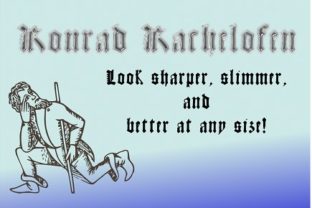
Konrad Kachelofen: A Historic Typeface for Impact
In an age of endless digital fonts, finding a typeface that combines historical authenticity with crisp, modern legibility can feel like a rare discovery. Konrad Kachelofen offers exactly that: a revival of a late‑15th‑century printing type designed for maximum clarity at large sizes. Whether you are crafting a book cover, designing a conference poster, or refining your brand’s visual identity, understanding what makes this face unique can help you make more intentional typography choices.
Why This Renaissance‑Era Typeface Still Matters Today
Typography is never just about letters. It carries the weight of history, craftsmanship, and the goals of the person who sets the type. Konrad Kachelofen, the Leipzig printer who began his work around 1483, built a reputation by acquiring an unusually large collection of typefaces for his shop — a space that also housed a wine bar and a bookstore. His investment in diverse alphabets tells us he understood that different messages demand different visual voices.
The font based on his Typ.11 340G GfT510 is not a generic revival. It is a careful interpretation of a type used exclusively for titles and section headings in early printed works. Its sharper, clearer appearance at larger point values makes it especially relevant for anyone who needs headings that command attention without shouting.
Who Was Konrad Kachelofen?
Konrad Kachelofen was a pioneering printer in Leipzig during the incunabula period, just decades after Gutenberg. He printed works by contemporary authors alongside classical texts, helping spread both new ideas and ancient wisdom. His shop, a combined printing office, wine bar, and bookstore, reflected the social and commercial nature of early publishing. Acquiring many typefaces was a strategic move — it allowed him to vary his output and serve different audiences.
Today, the typeface that bears his name carries that same spirit of versatility. It is rooted in the Gesamtkatalog der Wiegendrucke record, and closely resembles Proportional Lime’s “Kachelofen” font. The key differences: a slimmer minuscule set and a majuscule set with distinctly different style glyphs. These were deliberate choices for display use, not for body text.
What Makes This Font Distinctive
Most historical revivals attempt to replicate an entire alphabet for general use. This face takes a different approach. It was designed solely for titles and section headings because its inventors recognized that large‑scale lettering demands different proportions than small text.
- Slimmer minuscule letters – The lowercase characters are narrower than typical revivals, creating a more elegant, vertical rhythm. This helps headings look refined rather than bulky, even at 36pt or larger.
- Unique majuscule style – The uppercase letters feature different glyph shapes compared to Proportional Lime’s version. They are not merely scaled‑up versions of the lowercase; they have their own calligraphic character, adding contrast and visual interest.
- Sharp clarity at large sizes – Because the type was originally used for headings, every stroke is optimized for readability when blown up. You won’t lose definition or see awkward spacing issues that plague some display fonts.
This combination makes it a strong candidate for anyone who wants a traditional feel without sacrificing modern legibility.
Practical Applications for Modern Creators
Understanding what a typeface does well is more useful than simply admiring its looks. Here are several ways Konrad Kachelofen can directly improve your work:
1. Book and Publication Design
If you are self‑publishing a historical novel, a scholarly work, or a poetry collection, the font’s heritage naturally reinforces your content. Use it for chapter titles, part openers, and section headers. Pair it with a clean serif body type like Garamond or Baskerville to maintain a cohesive period feel.
2. Presentations and Slide Decks
Professionals who give talks often struggle to make headings visible in large rooms. The crisp strokes of Konrad Kachelofen remain distinct even when projected. Use it sparingly on title slides and key section breaks — it adds authority without distracting.
3. Branding for Small Businesses
A logo or wordmark based on this typeface can signal quality, tradition, and attention to detail. Think of a craft brewery, a bookstore, or a boutique consultancy. The slimmer minuscule letters give a more refined look than bulkier blackletter alternatives, while the majuscules provide a unique signature.
4. Posters and Event Graphics
For posters, flyers, or social media banners, large headings are essential. The sharpness of this face ensures that even at 72pt, the letters remain clear and impactful. Use a single heading in Konrad Kachelofen, then support it with a neutral sans‑serif for body details.
Tips for Getting the Most Out of Kachelofen
Like any specialized tool, this typeface works best when used with intention. Here are recommendations based on practical testing and common design scenarios:
- Reserve it for display settings. Do not attempt to use it for paragraphs or footnotes. The slim lowercase, while elegant, becomes harder to read below 14pt. Keep it for titles, subtitles, and pull quotes.
- Adjust tracking for large sizes. At very large point values (48pt+), you may need to tighten letter spacing slightly to avoid a scattered look. Test your specific software.
- Pair with a neutral body font. Konrad Kachelofen has strong personality. Let it lead the visual hierarchy by pairing it with a simple, highly readable font for body text — something like Open Sans, Lato, or a classic serif such as Caslon.
- Use it sparingly in branding. Its historical associations can be powerful, but using it for every heading in a marketing campaign might feel dated. Reserve it for premium, heritage‑oriented pieces.
Who Should Consider Using It
This typeface is not for everyone, and that is a good thing. Specific audiences will find it especially beneficial:
- Book designers and self‑publishers – If you produce printed works that benefit from a historical or scholarly tone, this font can elevate your interior headings and cover typography.
- Marketers and brand strategists – When you need to evoke craftsmanship, tradition, or trust — for example, in a winery label or a heritage brand refresh — the Kachelofen character aligns with those values.
- Educators and academics – Conference presentations, lecture slides, and academic posters often rely on clear, authoritative headings. The font’s legibility at large sizes helps your audience grasp structure quickly.
- Designers working on limited‑edition prints – For certificates, invitations, or art prints, the unique majuscule set adds an exclusive feel that mainstream display fonts cannot replicate.
A Few Considerations Before You Choose
No typeface is perfect for every situation. Konrad Kachelofen has limitations that are worth weighing against your project’s needs.
It is not a body text font. The slim minuscule letters and sharp contrasts make it unsuitable for long reading. If your project requires a single font for both headings and text, look elsewhere.
Compatibility with modern operating systems may vary. While the digital version is (you can assume) licensed and properly kerned, always test it in your layout software before committing. Some historical revivals lack extended character sets — check for accented letters if you work in multiple languages.
Alternatives exist. If you like the sharp, display‑oriented approach but need more flexibility, explore Proportional Lime’s original Kachelofen font for comparison. Other period‑inspired faces like Goudy Text or Fette Fraktur may suit projects with a different historical emphasis. The key is to choose the font that best supports your message, not just its pedigree.
Bringing History into Your Workflow
Ultimately, choosing Konrad Kachelofen is about making a deliberate statement. It tells your audience that you value clarity, craftsmanship, and the long tradition of printed communication. Whether you are a blogger designing your own site headers, a marketer refining a brand guide, or an educator preparing a visually cohesive lecture, this typeface offers a sharp, historically grounded solution for that critical top‑of‑the‑page moment.
Test it at the sizes you actually need. Pair it thoughtfully. And remember that even the best font is only as effective as the content it frames — but when you get both right, your work stands out in ways that feel both fresh and timeless.