Asiach: A Clean Sans Serif Font for Modern Creators
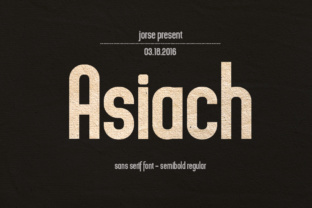
Typography shapes how audiences perceive content before they read a single word. A font carries tone, personality, and intention. Asiach, a clean sans serif typeface, offers a balance of clarity and warmth that works across many contexts. Designers, marketers, bloggers, entrepreneurs, and educators looking for a versatile font will find it a reliable tool for both digital and print projects.
What makes Asiach stand out is not complexity but the absence of it. Its clean letterforms reduce visual noise while maintaining readability. For anyone building a brand identity, designing a website, or preparing presentation materials, a font like Asiach removes friction between the message and the audience.
What Asiach Brings to Your Work
Asiach is a sans serif typeface designed with simplicity and function in mind. Its strokes are even, its spacing balanced, and its character shapes follow a consistent structure. This makes it suitable for both headlines and body copy without requiring extensive adjustments.
Key characteristics of Asiach include:
- High legibility at multiple sizes, from small mobile screens to large printed signage
- Neutral but friendly appearance that avoids the coldness of some minimalist fonts
- Consistent weight distribution that helps maintain visual harmony across blocks of text
- Open apertures on characters like a, e, and g, which improve recognition at smaller sizes
For content creators who publish across different platforms, Asiach reduces the need to switch fonts between headings, subheadings, and paragraphs. A single typeface that works across mobile, desktop, and print saves time and keeps your visual identity unified.
Creative Applications Across Audiences and Formats
Different users will find different strengths in Asiach. The font adapts to purpose based on how you pair it, size it, and apply it. Below are practical ways various professionals can use it effectively.
For Designers and Branding Professionals
When building a brand identity, typography carries as much weight as color palettes and logos. A clean sans serif like Asiach serves as a primary typeface for brands that want to communicate openness, reliability, and modern sensibility. It pairs well with serif fonts for contrast, but stands alone just as strongly.
Consider using Asiach for:
- Logo wordmarks where clarity is essential at small sizes
- Brand guidelines documents where the font demonstrates its own consistency
- Packaging copy that needs to be readable from a distance
- Website headers and navigation menus where users scan quickly
A designer working on a tech startup brand might use Asiach for all customer-facing materials. The font's neutral tone allows the brand's product and messaging to take center stage without typography competing for attention.
For Marketers and Content Strategists
Marketing materials depend on quick comprehension. Whether it is a landing page, a social media graphic, or an email newsletter, readers need to grasp key messages in seconds. Asiach supports this goal by presenting information clearly.
Specific applications in marketing include:
- Email subject lines and preview text rendered in a clean, scannable typeface
- Social media quote cards where legibility is critical on small screens
- Presentation slides where audiences read along with spoken content
- Print brochures and flyers that need to convey professionalism
Marketers can also combine Asiach with a more expressive display font for headlines. This contrast draws attention without sacrificing readability. For example, pairing Asiach with a bold script or a geometric serif gives marketing pages a clear hierarchy.
For Bloggers and Publishers
Long-form reading demands a typeface that reduces eye strain. Asiach works well for blog posts, articles, and newsletters because its clean lines guide the eye across lines of text without causing fatigue.
Tips for using Asiach in editorial content:
- Set body copy at 16 to 18 pixels on desktop and 14 to 16 pixels on mobile
- Use line spacing of 1.5 to 1.8 for comfortable reading
- Reserve heavier weights for subheadings to create clear visual breaks
- Avoid using all caps for long passages, as it reduces readability
Publishers who produce digital magazines or newsletters can adopt Asiach as a primary typeface. Its clean aesthetic supports both image-heavy layouts and text-focused articles equally well.
For Entrepreneurs and Small Business Owners
Small business owners often manage multiple aspects of their brand with limited resources. Choosing a single font that works everywhere simplifies design decisions. Asiach offers that flexibility for websites, business cards, invoices, and social media profiles.
A local café owner might use Asiach for menu boards, signage, and online ordering pages. Customers see consistent branding whether they are browsing a phone screen or standing at the counter. The font's friendly appearance also fits hospitality contexts where approachability matters.
For Educators and Freelancers
Course materials, handouts, lesson slides, and client proposals all benefit from clear typography. Asiach helps educators present information without visual clutter, letting students focus on content rather than design distractions.
Freelancers designing their own portfolios or project proposals can use Asiach to present work professionally. A consultant preparing a pitch deck for clients will find that clean typography signals attention to detail and respect for the reader's time.
Practical Recommendations for Working With Asiach
Using any typeface effectively requires attention to spacing, hierarchy, and context. Below are actionable guidelines to keep your results clear and professional.
Maintain Consistent Hierarchy
When using Asiach in multi-level content, establish a clear hierarchy with size and weight. Use the bold or semibold variant for headings, regular for body text, and light for secondary information. Avoid using too many weights in one document, as this can confuse the visual order.
A simple hierarchy might look like:
- Main heading: Bold, 2.5x the base size
- Subheading: Medium, 1.5x the base size
- Body text: Regular, base size
- Captions and notes: Light, 0.8x the base size
This structure lets readers navigate content intuitively without needing to decode the layout.
Pair With Complementary Fonts Intentionally
Although Asiach works well on its own, pairing it with another typeface can add personality. For editorial projects, combine Asiach with a classic serif like Garamond or Times New Roman for body text, reserving Asiach for headings and pull quotes. For more modern projects, pair it with a geometric sans serif or a monospace font for technical contexts.
When pairing, keep the contrast deliberate. Two similar sans serif fonts can feel redundant. Choose a partner typeface that offers a different mood or historical reference, so the combination feels intentional rather than accidental.
Adjust Spacing for Context
Asiach's default tracking and leading are well tuned, but different formats call for adjustments. In headlines, tightening tracking slightly can create cohesion. In body text, opening letter spacing by a small amount can improve readability at smaller sizes.
For print materials, test Asiach at the intended output size before finalizing. A font that reads well on screen may need adjustments for ink bleed or paper texture. Run a test print with a representative page to check legibility.
Respect the Platform
Where your content appears affects how Asiach performs. On mobile devices, text at 14 pixels or smaller requires a font with strong x-heights and open apertures, which Asiach provides. On large displays, take advantage of the font's clean curves for impactful headings. In printed materials, choose a heavier weight for small type to compensate for dot gain.
When embedding Asiach on a website, use font subsetting to include only the characters and weights you need. This keeps page load times fast and respects user bandwidth.
Adapting Asiach for Different Audiences
Different reader groups have different expectations. Understanding how your audience responds to typography helps you make better decisions with Asiach.
Younger Audiences Seeking Modern Aesthetics
Creators targeting Gen Z or millennial audiences can use Asiach paired with vibrant colors, asymmetrical layouts, and playful imagery. The font's clean forms ground more experimental design choices, preventing content from feeling chaotic. Use it in social media stories, short-form video captions, and app interfaces.
Professional and Corporate Audiences
For B2B content, annual reports, or internal communications, Asiach conveys reliability and clarity. Use darker color schemes, generous white space, and a restrained layout style. Avoid decorative elements that compete with the font's straightforward nature.
Creative and Hobbyist Communities
Audiences in creative fields appreciate when a font does not overdesign itself. Asiach lets craft, photography, or illustration projects remain the visual focus. Use it sparingly in portfolios or project descriptions, and let the work speak.
Staying Original With a Clean Sans Serif
Because Asiach is a clean, neutral typeface, originality comes from how you apply it, not from the font itself. The same font can feel completely different in two hands. One designer might use it for a minimalist brand with tight spacing and muted colors, while another might pair it with bold illustration and dense layouts.
To keep your work fresh:
- Experiment with unexpected pairings, such as Asiach with a handwritten script or a display serif
- Use color treatment to differentiate your use from others
- Adjust letter spacing and line height to create a custom typographic texture
- Combine Asiach with custom iconography or symbols that extend the visual language
The best designs with Asiach are those where the font serves the message without calling attention to itself. When readers finish a page and remember the content more than the typeface, you have used Asiach well.
Final Thoughts on Working With Asiach
Asiach offers a reliable foundation for a wide range of creative and professional projects. Its clean sans serif forms make it a versatile choice for branding, publishing, marketing, and education. By understanding its strengths, adjusting its application to your context, and treating it as a tool rather than a style statement, you can build content that communicates clearly and leaves a lasting impression.
Typography rarely makes or breaks a project on its own, but thoughtful typeface selection supports every other design decision. Asiach is one of those fonts that works quietly in the background, helping your ideas come through without distortion. Whether you are designing a website, writing a newsletter, or building a brand from scratch, Asiach gives you a clean starting point for everything that follows.