The Rise of Handmade Typography: How Chatting Is Redefining Visual Communication
In an era where digital design tools have made it possible to generate thousands of typefaces with a single click, the resurgence of handmade typography feels both deliberate and necessary. Among the recent wave of artisanal fonts, one name has quietly captured the attention of designers, brand strategists, and content creators alike: Chatting. Created by the independent type designer Meutuwah, Chatting is a handmade font that embodies fluidity, warmth, and an unmistakable sense of optimism. But this is not simply a story about a new font. It is a story about why the design community is gravitating toward imperfection, why brands are prioritizing emotional resonance over polish, and how a single typeface can reflect shifting expectations across industries.
What Is Chatting? A Closer Look at the Font and Its Maker
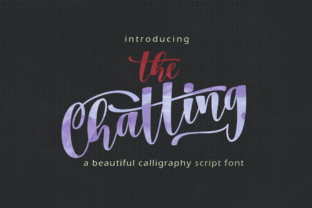
At its core, Chatting is a handwritten, script-style typeface designed entirely by hand. Unlike fonts that are digitally plotted from start to finish, Chatting carries the organic nuance of human strokes—slight variations in line weight, gentle inconsistencies in letterforms, and a rhythm that feels conversational rather than mechanical. The font was created by Meutuwah, a designer whose work consistently blurs the line between purposeful craft and playful expression. Every character in Chatting seems to flow naturally into the next, evoking the feeling of a quick, joyful note scribbled between friends.
But what sets Chatting apart is not just its aesthetic charm. It is the emotional posture it conveys. The font is unapologetically happy. There is a buoyancy in its curves, a lightness in its ascenders, and an approachability that many digital-first fonts struggle to replicate. This makes Chatting uniquely suited for projects that require a human touch—whether that is a personal brand identity, a heartfelt social media campaign, or a product packaging design that needs to communicate warmth at a glance.
For professionals who work daily with typography—graphic designers, web developers, content marketers, and brand consultants—understanding why a font like Chatting resonates goes beyond personal taste. It speaks to a broader realignment in how we think about visual communication in a crowded digital landscape.
The Handmade Typography Movement: Why Imperfection Is Winning
Over the past decade, we have witnessed a steady migration away from sterile, hyper-polished design. The rise of handmade typography is not an accident; it is a response to the saturation of sameness. When every brand uses the same system fonts or the same minimalist sans-serifs, the visual landscape becomes homogeneous. Consumers, in turn, become desensitized. Handmade fonts like Chatting disrupt this pattern by reintroducing what algorithms cannot replicate: authenticity.
This shift is part of a larger cultural movement toward imperfection as a signal of trust. In photography, we see the popularity of film grain and unretouched portraits. In writing, conversational tones have replaced corporate jargon. In branding, hand-drawn logos and custom lettering have become shorthand for small-batch quality and genuine care. Chatting fits naturally into this ecosystem because it does not try to hide its human origin. Every loop and curve carries the evidence of a real hand moving across paper.
From a market perspective, the handmade font segment has grown steadily as independent foundries and designers like Meutuwah gain visibility through platforms that prioritize craft over mass production. Professionals are no longer limited to the offerings of major type foundries; they can source unique, emotionally resonant typefaces that help their work stand out. Chatting, in particular, has found traction among entrepreneurs and freelancers who need to communicate personality quickly—often on tight budgets and shorter timelines.
Why People Are Paying Attention to Chatting Right Now
The timing of Chatting’s emergence is no coincidence. Several converging trends have created a perfect environment for a font like this to gain traction.
The Demand for Emotional Connection in Branding
Modern consumers are increasingly skeptical of faceless corporations. They want to know who is behind the product, what values drive the company, and whether the brand feels relatable. This has pushed businesses of all sizes to adopt visual languages that feel personal. Chatting, with its handwritten quality and joyful tone, immediately signals that a brand is approachable, human, and confident enough to be imperfect. For a startup launching a lifestyle product or a freelance consultant building a personal brand, using Chatting in headers or logotypes can create a first impression that feels like a handshake rather than a billboard.
The Shift Toward Small-Scale and Independent Design
Platforms like Creative Market, Gumroad, and Etsy have democratized access to high-quality design assets. Independent type designers such as Meutuwah can now reach a global audience without needing a large foundry or distribution deal. This has encouraged a renaissance in niche, expressive typefaces. Professionals are increasingly seeking out fonts that tell a story, and Chatting’s backstory—as a handmade creation by a dedicated designer—adds to its appeal. It is not just a tool; it is a piece of craftsmanship that carries meaning.
The Rise of Visual Storytelling in Content Marketing
Content marketers and social media managers are under constant pressure to produce scroll-stopping visuals. In a feed dominated by polished stock imagery and templated graphics, a handcrafted font like Chatting offers a way to break the pattern. Whether used in Instagram stories, email headers, or blog pull quotes, the font injects personality into otherwise standard layouts. Its fluid, happy character makes it ideal for uplifting content, announcements, or any message that aims to inspire or connect.
Changing Needs, Preferences, and Workflows
The relevance of Chatting also stems from how professional workflows have evolved. Remote collaboration, faster project cycles, and the proliferation of self-serve design tools have changed what professionals expect from typography.
Flexibility Across Media
Chatting performs well across both digital and print contexts, which is increasingly important for professionals who produce content for multiple platforms. Its legibility at display sizes makes it effective for headings and short-form messages, while its organic flow ensures it does not feel out of place on packaging, merchandise, or editorial layouts. For freelancers juggling brand identity, web design, and social media assets, a versatile font like Chatting reduces the need to switch between multiple typefaces, streamlining the creative process.
Speed and Authenticity in Prototyping
When working under tight deadlines, designers often need to convey a mood quickly. Chatting’s inherently happy and fluid character allows for rapid prototyping of brand concepts that need to feel approachable. Rather than spending hours fine-tuning a custom handwritten logotype, a designer can drop Chatting into a layout and immediately assess whether the emotional tone aligns with the project. This speed does not compromise quality; it simply respects the reality of modern design workflows.
Alignment with Inclusive and Accessible Design
Another subtle but important factor is the growing emphasis on inclusive design. Fonts that are overly stylized can become difficult to read, alienating users with visual processing differences. Chatting, despite its handmade nature, maintains a level of clarity that makes it usable in contexts where readability matters. Its letterforms are distinct, and its spacing is generous enough to avoid crowding. This balance between personality and legibility is exactly what professionals need when designing for diverse audiences.
Practical Examples and Observations
To understand how Chatting functions in real-world applications, consider a few scenarios that reflect current industry needs.
Scenario 1: A Lifestyle Blogger Rebranding
A wellness and lifestyle blogger with a modest but engaged audience decides to rebrand from a generic template to something that reflects her personal voice. She uses Chatting for her blog title, social media cover images, and email newsletter header. The font’s fluid, happy quality instantly makes her content feel more intimate. Subscribers begin to comment on how the new look feels more authentic. The blogger’s engagement metrics improve, not because the font itself is magical, but because it signals a shift from generic content to personal expression.
Scenario 2: A Small-Batch Product Launch
An entrepreneur launching a line of organic candles chooses Chatting for the product labels. The font’s handwritten appearance complements the artisanal nature of the product, reinforcing the message that each candle is made in small quantities with care. On the shelf—or in an online listing—the labels stand out against competitors using standard serif or sans-serif fonts. Customers perceive the product as more personal and trustworthy, which directly influences purchase decisions at the point of sale.
Scenario 3: A Nonprofit Seeking Warmth
A nonprofit organization working in community development updates its website and campaign materials to feel less institutional. By incorporating Chatting in headlines and call-to-action banners, the organization softens its visual presence. The font conveys warmth and approachability, which encourages site visitors to engage more deeply with the content and to trust the mission. The choice of typography becomes an unspoken part of the organization’s credibility.
These examples are not hypothetical; they reflect patterns that emerge when professionals intentionally choose typefaces that carry emotional weight. Chatting is not the only handmade font on the market, but its particular blend of fluidity and happiness makes it a strong candidate for projects where optimism and human connection are central.
Connecting to Larger Developments
The conversation around Chatting is ultimately a conversation about where design is headed. As artificial intelligence becomes more integrated into creative tools, the value of human-made elements will only increase. We are already seeing this in the growing demand for custom illustration, hand-lettered logos, and analog textures. Fonts like Chatting represent a bridge between the efficiency of digital production and the irreplaceable quality of human touch.
At the same time, the broader economy is moving toward personalization at scale. Brands want to treat each customer as an individual, and typography is one of the most immediate ways to convey that intention. A font that looks like it was written by a person—rather than generated by a machine—aligns perfectly with this goal. Chatting enables brands to feel smaller, more responsive, and more caring, even when they operate at significant scale.
For creators and entrepreneurs, the lesson is clear: the tools you choose are not neutral. Every font, color, and layout choice communicates something to your audience. By selecting a typeface like Chatting, you are making a deliberate statement about your values—that you prioritize connection over conformity, warmth over cold precision, and authenticity over polish.
Looking Forward: What Chatting Teaches Us About Design Choices
Chatting is not a font for every project. Its joyful, casual character may not suit legal documents, financial reports, or luxury brands that require formality and restraint. But that is precisely its strength. The best design tools are those that know what they are good at and do not try to be everything to everyone. Chatting excels in contexts where human emotion is the primary objective, and professionals who recognize this can deploy it with precision and impact.
As the design industry continues to evolve, the fonts that endure will be those that help people communicate more authentically. Chatting, with its handmade roots and optimistic spirit, is well-positioned to be one of those enduring tools. For professionals who want their work to feel alive, connected, and genuinely human, Chatting offers more than just a typeface—it offers a tone of voice.
Whether you are a marketer crafting a campaign, a freelancer building a visual identity, or an entrepreneur launching a new brand, the choice to use Chatting is a choice to speak with warmth. In a world that often defaults to the mechanical and the generic, that is an advantage worth taking.