Anehena: The Abstract-Ornamental Blackletter That Redefines Display Typography
When you first encounter Anehena, it doesn't behave like a typical blackletter typeface. There is something deliberately unfamiliar in its strokes—a tension between medieval structure and modern abstraction that immediately sets it apart. Designed by the Arterfak Project, Anehena and its italic counterpart offer a distinctly unconventional take on the blackletter tradition. This is not a font designed for subtlety or quiet readability. It is built for presence, for visual statements, and for those who gravitate toward the abstract.
In a landscape crowded with predictable sans-serifs and overused display faces, Anehena arrives as a deliberate alternative. It asks a simple question: what happens when you strip blackletter of its historical rigidity and rebuild it with ornamental freedom? The answer is a typeface that feels both ancient and futuristic, structured yet fluid, and thoroughly unlike anything in your current font library.
What Exactly Is Anehena?
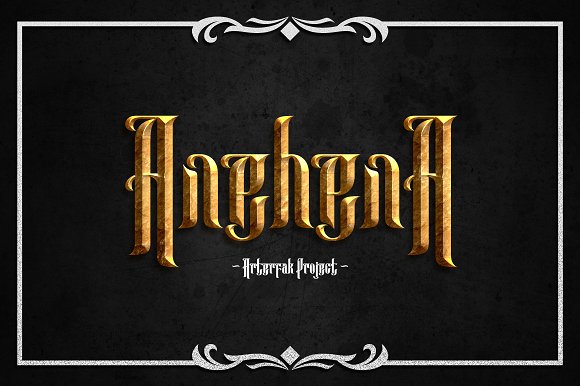
Anehena is an abstract-ornamental blackletter typeface created by the Arterfak Project, a design initiative known for producing unconventional, visually arresting typography. Unlike traditional blackletter fonts that adhere to strict historical forms—think Textura, Fraktur, or Rotunda—Anehena takes the core DNA of blackletter and reinterprets it through an abstract lens. The result is a typeface that retains the vertical emphasis and angular drama of blackletter while introducing ornamental flourishes, irregular curves, and a sense of organic unpredictability.
The font is available in two styles: regular and italic. The regular weight carries the main abstract-ornamental expression, while the italic version introduces slant and additional fluidity, making it suitable for accent text or layered typographic compositions. Both styles are purpose-built for headlines, titles, display work, and any context where typography needs to command attention.
The Design Philosophy Behind the Typeface
The Arterfak Project has never been interested in playing it safe. With Anehena, the team explored the tension between legibility and abstraction, asking how far a blackletter form can stretch before it becomes pure ornament. The answer lies somewhere between recognizable letter shapes and expressive, almost calligraphic strokes. Each character feels hand-drawn in spirit, even though it exists as a digital font. This handcrafted quality gives Anehena an warmth and unpredictability that rigid geometric fonts lack.
The ornamental quality is not merely decorative—it is structural. The flourishes and abstract forms aren't added on top of letters; they are integral to the letter shapes themselves. This integration is what separates Anehena from fonts that simply add decorative swashes to standard letterforms. Here, ornament and letter are inseparable.
Who Is Anehena For?
Anehena is not a font for everyone, and that is precisely its strength. It is designed for specific use cases and particular audiences who understand that typography can be more than just a vehicle for words—it can be an art form in itself.
- Graphic designers and art directors seeking a distinctive voice for branding, posters, or editorial design will find Anehena offers a unique visual signature that cannot be replicated by more conventional typefaces.
- Independent creatives and small studio owners who want their visual identity to stand out in a crowded market will benefit from the font's ability to convey originality and artistic confidence.
- Music and event promoters designing flyers, festival branding, or album art will appreciate how Anehena communicates energy, rebellion, and a sense of the underground.
- Fashion and lifestyle brands aiming for an edgy, avant-garde aesthetic can leverage the typeface to build visual identity that feels curated and intentional.
- Web designers and content creators who need impactful display typography for hero sections, video titles, or social media graphics will find Anehena equally effective in digital and print contexts.
If your audience expects conventional, highly readable text, Anehena is likely not the right choice. But if your project calls for personality, abstraction, and a touch of the unconventional, this typeface becomes a powerful tool.
Key Characteristics of Anehena
Understanding the specific traits of Anehena helps designers evaluate where and how to deploy it effectively. Here are the attributes that define the typeface:
- Abstract letterforms: Characters are not bound by traditional blackletter rules. Proportions, angles, and curves are reinterpreted through an abstract lens, giving each letter a unique sculptural quality.
- Ornamental integration: Flourishes and decorative elements are built into the letter structures, not added as afterthoughts. This creates cohesive, visually unified text blocks.
- Strong vertical emphasis: True to its blackletter roots, Anehena maintains a pronounced vertical axis, making it ideal for headlines and short-form text where impact is paramount.
- Expressive italic variant: The italic style offers a more fluid, slanted interpretation that pairs well with the regular weight. It can be used for emphasis, subheadings, or as a contrasting element in multi-weight compositions.
- Display-optimized spacing: Letter spacing and kerning are calibrated for larger sizes. At 24 points and above, Anehena reveals its full ornamental detail and spatial rhythm.
Practical Expectations When Using Anehena
No typeface is without trade-offs, and Anehena is no exception. Understanding its limitations is just as important as appreciating its strengths. Here is what you should realistically expect when working with this font:
Legibility at small sizes is limited. Because Anehena is designed for display use, it performs best at headline sizes. Body text applications below 16–18 points will likely result in muddied details and reduced readability. Always test the font at your intended output size before committing to a design.
Not suitable for long-form reading. The abstract ornamentation that makes Anehena visually striking also makes it fatiguing for extended reading. Reserve it for titles, pull quotes, logos, and short emphasis text. Pair it with a clean, neutral sans-serif or serif for body copy to maintain overall readability.
Brand identity considerations. Using Anehena in a brand identity signals a specific aesthetic—edgy, artistic, unconventional. This can be a perfect match for some businesses but may alienate audiences expecting a more conservative or approachable look. Consider your brand personality carefully before committing.
Where Does Anehena Shine? Real-World Applications
To understand the true value of Anehena, it helps to see where it performs best. Here are several real-world scenarios where this typeface can make a significant impact:
Music festival branding. Imagine a poster for an experimental electronic music festival. The headliners are avant-garde artists, the visual direction is dark and immersive. Anehena in large headline sizes, paired with a thin geometric sans-serif for the lineup details, instantly communicates the event's unconventional nature. The italic variant could be used for the festival name, adding a dynamic, almost rhythmic quality that mirrors the music itself.
Independent magazine covers. A small-press art magazine covering underground culture, street art, and experimental design could use Anehena for its cover title. The ornamental abstraction would differentiate it from mainstream magazine typography and signal to readers that this publication operates outside conventional boundaries.
Fashion lookbook titles. A streetwear brand releasing a limited-edition collection with heavy graphic influence could use Anehena for the collection name in the lookbook. The blackletter heritage connects to streetwear's roots in rebellion and counterculture, while the abstract treatment feels contemporary and fresh.
Video title sequences. For content creators producing short films, music videos, or branded content, Anehena can be used in title cards and lower thirds. Its ornamental quality reads well on screen and adds production value without requiring complex motion graphics.
Packaging for premium or niche products. Limited-edition spirits, artisanal goods, or luxury candles targeting a design-conscious audience could use Anehena for product names or brand marks. The typeface communicates craftsmanship, uniqueness, and attention to detail.
How to Evaluate Whether Anehena Fits Your Project
Making the right typeface choice requires honest self-assessment of your project's needs. Use the following questions as a guide when considering Anehena:
What is the emotional tone of your project? Anehena conveys boldness, abstraction, artistry, and a touch of rebellion. If your brand or project needs to communicate these qualities, the font is worth testing. If the tone needs to be friendly, approachable, or professional in a conventional sense, look elsewhere.
How will the typography be used? If your primary use is headlines, titles, display text, or short-form emphasis, Anehena is well-suited. If you need a typeface for body paragraphs, long articles, or detailed instructional content, it will not serve you well. Consider pairing Anehena with a clean, neutral secondary font for body text.
Who is your audience? Audiences familiar with experimental design, art, fashion, and underground culture are more likely to appreciate Anehena's abstract qualities. Mainstream or conservative audiences may find it difficult to read or off-putting. Know your audience before choosing.
What is the medium? Anehena works well in both print and digital contexts, but always test at your specific output size and resolution. Large format print, high-resolution screens, and physical packaging are ideal. Small digital interfaces or low-resolution displays will obscure the ornamental details.
The Value of Abstract Typography in Modern Design
As design trends continue to swing between minimalism and maximalism, abstract typefaces like Anehena occupy a valuable middle ground. They offer visual richness without being purely decorative, and they bring personality without sacrificing structure. In an era where brands are desperate to differentiate themselves, a distinctive typeface is often the most cost-effective way to build recognizability.
Anehena is not a font you choose by accident. It is a deliberate, confident choice that says something about the designer and the brand. It suggests a willingness to experiment, an appreciation for craft, and an understanding that typography is not just a tool but a medium of expression.
For designers tired of reaching for the same safe options, for brands that want to look like nothing else in their category, and for creators who believe that every visual element should carry meaning, Anehena offers a compelling path forward. It is a reminder that blackletter, one of the oldest typographic traditions, still has room to evolve—and that abstraction, when done with intention, can feel more honest than familiarity.
Before committing to Anehena, download the trial version, test it at multiple sizes, pair it with secondary fonts, and see how it performs in your specific layout. The best typeface decisions come from hands-on experimentation, not theory alone. Let the work itself tell you whether this abstract-ornamental blackletter is the right voice for your next project.
In the end, Anehena is an invitation. It invites designers to think beyond the expected, to treat letterforms as art, and to create work that refuses to blend in. For those with an abstract taste—and the courage to use it—this typeface from the Arterfak Project is ready to become part of your visual vocabulary.