GaGoo: A Playful Script Typeface for Captivating Kids' Designs
When you are creating something for children, every element matters. The colors, the layout, the illustrations, and especially the typeface all work together to capture a young audience’s attention and hold their imagination. A font that feels too serious or rigid can make even the most colorful design feel distant and uninviting. That is where GaGoo steps in. GaGoo is an experimental script typeface with a distinctly playful look, purpose-built for projects aimed at kids. It brings a sense of movement, whimsy, and warmth that standard fonts simply cannot match. This article explores what makes GaGoo unique, the real-world challenges it helps solve, and how you can use it effectively to create designs that children love and parents trust.
What is GaGoo and Why Does Playfulness Matter in Kids’ Design?
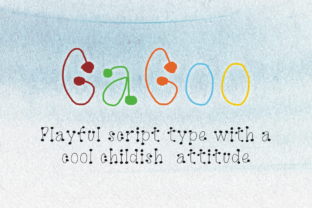
GaGoo is not just another decorative font. It is an experimental script typeface that breaks away from conventional letterforms to create a lively, hand-drawn feel. Each character carries a sense of spontaneity, as if it were written by a friendly hand rather than a machine. This quality is essential in children’s design because kids respond best to visuals that feel personal and approachable. A playful typeface like GaGoo helps lower the barrier between the content and the child, making text feel like part of the fun rather than an instruction to be followed.
The challenges of designing for kids go beyond aesthetics. You need to hold attention in a world full of distractions. You also need to communicate clearly without being boring. GaGoo addresses both needs. Its irregular strokes and bouncy baseline create a rhythm that draws the eye along the words. This makes reading feel less like a task and more like a game. For young readers who are still developing literacy skills, a friendly typeface can reduce anxiety and increase engagement. GaGoo’s playful look serves as a visual cue that the content is meant to be enjoyed, not just consumed.
Common Challenges in Children’s Design and How GaGoo Helps
Anyone who has worked on a children’s project—whether a book, a website, a learning app, or a party invitation—knows that the balance between fun and function is delicate. One common struggle is making text legible without sacrificing personality. Traditional serif or sans-serif fonts can feel sterile, while overly ornate script fonts can be hard to read. GaGoo sits in a sweet spot: it is decorative enough to feel special, yet its letterforms remain recognisable enough for children and parents alike. The experimental nature of GaGoo means that each letter has its own character, but the overall consistency keeps the text readable.
Another frequent challenge is creating a cohesive visual identity for a brand or product aimed at children. You want the font to reflect energy and creativity, but you also need it to work across different mediums—from a website header to a printed sticker. GaGoo performs well in both digital and print environments. Its natural curves and varied stroke widths give it a tactile quality that translates beautifully to physical materials like posters, book covers, and packaging. Because it is a script typeface, it pairs well with clean sans-serif fonts for body text, allowing you to create a hierarchy that is both playful and practical.
For educators and content creators, there is also the challenge of making learning materials feel inviting. Worksheets, flashcards, and classroom decorations often rely on fonts that are either too plain or too distracting. GaGoo offers a middle ground: its personality adds warmth without overwhelming the content. When used sparingly for headings or key phrases, it can signal to a child that this is something fun to explore. For example, a math worksheet that uses GaGoo for the word “Challenge!” or “Let’s Count!” immediately sets a lighter tone than one using a standard bold font.
Practical Applications of GaGoo in Real-World Projects
The best way to understand the value of GaGoo is to see where it shines. Consider a children’s book cover. The title in GaGoo instantly communicates a sense of adventure and play. Pair it with a simple sans-serif for the author name and subtitle, and you have a cover that is both eye-catching and professional. For a bedtime story, GaGoo can make the title feel like it was written just for that child. In a chapter book for early readers, dropping a GaGou pulled quote at the start of each chapter can create a visual break that keeps young readers motivated to turn the page.
Educational apps and websites are another natural home for GaGoo. When a child opens a learning game, the first thing they see is often the logo or a welcome message. A font like GaGoo can make that initial interaction feel like a friendly hello. Buttons that say “Play” or “Start” in GaGoo feel more like an invitation than a command. Because GaGoo is an experimental script, you can also use it to highlight instructions or reward messages. A cheerful “Great job!” in GaGoo after a correct answer reinforces positive behavior through both the words and the visual style.
Event materials—birthday party invitations, thank-you cards, or holiday crafts—benefit tremendously from GaGoo’s charm. A birthday invitation that uses GaGoo for the child’s name and the party details immediately sets a festive tone. Parents appreciate that the font is readable while still feeling custom and handmade. For DIY projects, GaGoo works well for labels on gift tags or as part of a banner. Because it mimics handwriting, it can make store-bought items feel personal and unique.
Small business owners who create products for children also find GaGoo useful. If you sell kids’ room decor, for instance, a wall art print with a motivational quote in GaGoo can stand out from generic options. The font’s playful look fits themes like adventure, imagination, or learning. For children’s clothing brands, GaGoo can be embroidered or printed on tags or directly on garments for a whimsical touch. The key is to use GaGoo where you want to convey warmth, creativity, and a sense of fun—without overwhelming the overall design.
How Different Users Can Approach GaGoo Effectively
Not everyone who designs for children comes from the same background, and GaGoo can be adapted to different skill levels and goals. A professional graphic designer working on a branding project might use GaGoo as the primary display font for a children’s toy line. They can experiment with color and spacing to create a consistent brand voice. Paired with a neutral backdrop and vibrant illustrations, GaGoo can anchor a visual identity that feels both modern and timeless.
A parent creating a birthday invitation at home may have less experience with typography. For them, GaGoo offers a built-in advantage: it already looks finished. You do not need to spend hours tweaking kerning or choosing the perfect pairing. Just set your text in GaGoo, add a simple background, and you have a professional-looking result. The font’s natural rhythm does most of the work. For classroom teachers, GaGoo can be used sparingly on bulletin boards or in newsletters to highlight student names or special events. It helps create a classroom environment that feels welcoming and child-centered.
For content creators who produce videos or social media posts aimed at kids, GaGoo works well in titles, lower thirds, and call-to-action buttons. In a video about science experiments, a GaGoo title for “Try This at Home!” adds a playful layer that encourages participation. On Instagram, using GaGoo for quote graphics or story text can help your content feel more relatable and less corporate. The experimental nature of GaGoo means it does not look like every other font in a feed, which helps your content stand out.
Recommendations and Useful Considerations When Using GaGoo
To get the most out of GaGoo, it helps to think about where and how you apply it. Because it is a script typeface with strong personality, use it for short blocks of text—headings, slogans, names, or key phrases. For longer paragraphs, pair GaGoo with a clean, neutral font like a sans-serif to maintain readability. This combination gives you the best of both worlds: the warmth of GaGoo for emphasis and the clarity of a simpler font for body copy.
Color choice also matters. GaGoo works beautifully in bright, saturated colors that appeal to children, but it also holds its own in softer pastels or even black and white. Experiment with contrasting colors for the font and background to make the text pop. For digital use, ensure sufficient contrast for small screens. For print, test the font at different sizes to see how the curves and strokes translate to physical materials. GaGoo tends to shine at medium to large sizes where its details are visible.
Consider your audience’s age. GaGoo is great for preschool through early elementary, but for older children or tweens, you might want to use it more sparingly. The playful look that delights a five-year-old might feel too young for a ten-year-old. In those cases, using GaGoo for just one or two elements—like a logo or a special section header—keeps the design age-appropriate while still adding a touch of fun.
Do not be afraid to test GaGoo in unconventional ways. Because it is an experimental script, it can handle creative treatments like outlines, shadows, or gradients without losing its character. For digital projects, consider animating the font slightly—maybe a gentle bounce or a fade-in—to emphasize its playful nature. Just keep the movement subtle so the text remains readable. The goal is always to enhance the user experience, not to distract from it.
Outcomes: What You Can Expect When You Use GaGoo
When you choose GaGoo for a children’s project, you are making a decision to prioritize warmth and engagement. The most noticeable outcome is that your design will feel more inviting. Children will spend more time looking at the text, which can lead to better comprehension and retention if the content is educational. Parents and educators will appreciate that you have put thought into the visual experience. In a market where many children’s products look generic, GaGoo helps you stand out by offering a genuine sense of personality.
From a practical standpoint, GaGoo saves you time. Because it already has a built-in playful feel, you do not need to add extra decorative elements to make your design fun. The font does the heavy lifting. This allows you to focus on other important aspects like layout, imagery, and content quality. For small teams or solo creators, this efficiency is valuable. You get a polished result without spending hours on styling.
Ultimately, GaGoo is more than a typeface—it is a tool for connection. When a child sees text that looks friendly and approachable, they are more likely to engage with the message behind it. Whether you are teaching a new concept, telling a story, or celebrating a milestone, GaGoo helps you communicate in a way that feels human. And in children’s design, that connection is everything. By understanding what GaGoo is, when to use it, and how to pair it with other design elements, you can create projects that are not only visually appealing but also genuinely effective at capturing a child’s heart and mind.