Bring Energy to Your Designs with Kokan Font
Choosing the right typeface can transform a project from functional to memorable. While many fonts aim for neutrality or elegance, there are times when a project calls for raw playfulness and high energy. This is where Kokan enters the scene. Originating from the vibrant world of comic books, Kokan is a cartoon-style font that immediately evokes a sense of movement, humor, and youthful enthusiasm. It is not a subtle font; it is designed to grab attention and hold it.
For creators and business owners alike, understanding how to harness a font like Kokan can open up new avenues for communication. It breaks the monotony of standard sans-serifs and offers a distinct personality that works across various media. This article explores what makes Kokan unique and provides practical, actionable ways to incorporate it into your work without compromising clarity or professionalism.
What Makes Kokan Stand Out
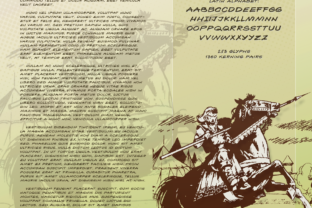
Kokan is not just another display font. Its roots in comic book lettering give it a specific set of characteristics that set it apart. The letters often have irregular, bouncy baselines, exaggerated curves, and a hand-drawn feel. This design choice mimics the spontaneity of speech bubbles and action lines found in graphic novels.
Key features include:
- Bold weight and thick strokes that ensure legibility even at smaller sizes, despite its playful form.
- Irregular spacing that creates a dynamic rhythm, very different from the uniform spacing of text fonts.
- Rounded, chunky letterforms that feel friendly and approachable rather than aggressive.
- Ligatures and alternate characters in many versions, which add to the comic book authenticity.
These qualities make Kokan inherently energetic. It does not just sit on the page; it jumps out. For a marketer or designer looking to inject enthusiasm into a headline or call-to-action, this font delivers immediately.
Creative Applications Across Different Media
The true value of Kokan lies in its versatility within specific contexts. It is not a body text font, but a display font for headlines, logos, and short bursts of text. Here are several practical applications where Kokan shines.
Comics and Sequential Art
This is the font’s native environment. Whether you are publishing a digital comic, a print zine, or an illustrated story, Kokan provides authentic lettering for dialogue and sound effects. For indie comic creators and hobbyists, using Kokan saves time compared to hand-lettering each panel while still preserving that hand-crafted charm. Pair it with a simple sans-serif for narration boxes to create contrast. For example, use Kokan for “BOOM!” or “WHAM!” in action sequences to amplify the visual impact.
Branding for Fun and Youth-Oriented Products
Small business owners and startups in the toy, gaming, or children’s education markets can use Kokan to build a brand identity that feels inclusive and energetic. Imagine a logo for a board game café or a brand of organic fruit snacks. Kokan’s cartoon appeal signals that the brand is approachable and enjoyable. However, it works best when paired with a clean, neutral font for the rest of the branding to avoid overwhelming the audience. For example, use Kokan for the company name and a simple geometric font for taglines.
Social Media and Digital Content
In the crowded world of social feeds, standing out is essential. Marketers and bloggers can use Kokan for quote graphics, announcement posts, or story highlights. Its bold, irregular shape cuts through the visual noise. For instance, a fitness blogger promoting a “30-Day Challenge” might use Kokan for the challenge name in a vibrant color on a simple background. The key is to keep the surrounding elements minimal so the font remains the hero. Avoid using it for long blocks of text in posts; reserve it for headlines and key phrases.
Event Posters and Flyers
For event organizers and freelancers, Kokan is excellent for posters advertising concerts, festivals, or pop-up markets. It conveys a sense of excitement and immediacy. A poster for a street art festival or a live comedy show would benefit from Kokan’s humorous edge. When designing a flyer, use Kokan for the event name and date, and supplement with a clear sans-serif for venue details and pricing. The result is a hierarchy that guides the eye from the exciting headline to the practical information.
Children’s Educational Materials
Educators and publishers creating worksheets, flashcards, or classroom posters can use Kokan to make learning materials more engaging. Its friendly, non-intimidating appearance helps reduce the formal barrier of traditional fonts. For vocabulary cards or math problem headers, Kokan adds a layer of fun. It can also be used in e-learning modules for the title slides. Just ensure that the text is large enough and contrast is high, as the font’s irregularities can reduce readability if scaled down too much.
Adapting Kokan for Different Audiences and Goals
While Kokan has a built-in cartoon personality, you can adjust its usage to suit different tones. The context—the colors, images, and supporting fonts—dictates whether the final piece feels childish, retro, or edgy.
For a Youthful and Innocent Vibe
Combine Kokan with pastel colors and soft illustrations. Use it for a baby shower invitation or a daycare center logo. The rounded shapes become cute rather than cartoonish. Avoid heavy outlines or dark backgrounds. Keep the text in uppercase for a consistent, neat appearance.
For an Edgy or Streetwear Look
Use Kokan with high-contrast colors like black and neon yellow. Add grain textures or overlay it on graffiti-style backgrounds. This works well for music brands or clothing lines targeting young adults. The irregular baseline of Kokan fits naturally with the chaotic energy of street culture. For example, a poster for a skateboard event can use Kokan in all caps with a distressed effect.
For a Retro or Vintage Feel
Kokan pairs surprisingly well with halftone patterns and muted, faded colors. This suggests a 1970s or 1980s comic book aesthetic. Use it for diner menus, retro video game art, or vintage toy packaging. The key is to keep the color palette limited and lean on the hand-drawn feel of the font.
Practical Tips for Using Kokan Effectively
To keep your results clear, organized, and audience-friendly, follow these recommendations.
Maintain Readability
Kokan is a display font, not a text font. Limit its use to short headlines, logos, or single words. For body text, choose a simple complementary font like a clean sans-serif or a serif. This creates a visual hierarchy and prevents eye strain. A common guideline is to use Kokan for elements that are 24 points and above.
Control Kerning and Spacing
The irregular spacing in Kokan can sometimes create awkward gaps. When using design software, manually adjust the kerning between specific letter pairs. For instance, an “A” followed by a “V” might need tightening. Most versions of Kokan come with built-in spacing that works well at medium sizes, but always preview your headline at its intended display size.
Use Color and Contrast
Kokan’s thick strokes mean it works well on solid backgrounds. Avoid placing it over busy patterns or photographs without a clear text box or shadow. White Kokan on a dark blue or black background is highly readable. For colorful backgrounds, ensure the font color contrasts sufficiently. A bright yellow on white will lose impact; a darker orange or red would work better.
Limit the Number of Styles
Since Kokan is already visually loud, resist the urge to use multiple variations within one project. Stick to one weight and style. If you need emphasis, use a different color or size rather than italicizing or outlining, which can distort the original design. Let the font’s natural energy do the work.
Balancing Inspiration with Practicality
Kokan is a tool, not a magic solution. Its effectiveness depends on thoughtful application. Start by identifying a project where a playful, loud tone is appropriate. Test it on a few headline options and ask yourself if it communicates the intended emotion. If the answer is yes, you have the right font.
For example, a local bakery launching a new line of whimsical cupcake flavors could use Kokan for the promotional banner. The font’s cartoon energy aligns with the fun of the product. Alternatively, a legal firm would find Kokan inappropriate, as it would undermine trust and formality. Understanding this context matters.
Keep your target audience in mind. While Kokan appeals to a wide range of ages, it strongly resonates with those who appreciate humor, nostalgia, and visual impact. If your audience skews older or more conservative, use Kokan sparingly, perhaps for a single accent word or a logo element. For younger or creative demographics, it can be used more liberally.
Actionable Project Ideas
Here are a few specific ideas to get started.
- Create a series of social media templates for a month-long event. Use Kokan for the day number and event name, with a consistent background color.
- Design a single-page comic strip for a newsletter. Use Kokan for all dialogue, and a legible sans-serif for the narrative captions below each panel.
- Revamp a product label for a small line of artisan hot sauces or craft sodas. Kokan can give each flavor a distinct, bold personality.
- Build a quick bookmark or promotional card for a local bookstore. Use Kokan for the store name and a simple icon.
Each of these projects allows you to experiment with scale, color, and pairing without committing to a large rebranding effort.
Final Thoughts on Using Kokan
Kokan is not a neutral background player. It is a lead actor in any design composition. When used with intention, it brings an irreplaceable energy that captures attention and communicates warmth and fun. For designers, marketers, educators, and entrepreneurs, it offers a direct way to break through visual clutter and connect with an audience emotionally.
Treat Kokan as a specialist. Use it for moments that need extra punch. Pair it with clean, quiet elements. Check readability at your final output size. By doing this, you respect both the font’s unique character and your audience’s need for clear communication. Whether you are working on a poster, a branding package, or a digital asset, Kokan can transform a standard piece into one that feels alive and engaging.
Ready to experiment? Open your design tool, type a single word in Kokan, and see how it changes the mood of your canvas. Then build from there, making intentional choices that serve your project’s goals. That simple step is often all it takes to unlock a new level of creative expression.