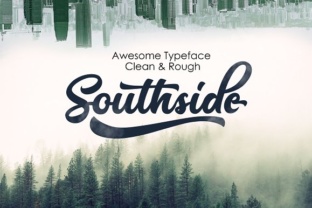
Southside: A Display Font with Grit and Grace
Some fonts try to be everything to everyone. They stay neutral, play it safe, and fade into the background. Southside is not that font. It steps forward with purpose, offering two distinct personalities in one typeface family: Clean and Rough. This is a display font built for work that demands attention—logos that need to stick, headlines that need to land, and packaging that needs to jump off the shelf. Whether you reach for the polished Clean version or the textured, worn-in Rough version, Southside delivers a blend of confidence and character that feels both crafted and lived-in.
What Makes Southside Stand Out: Two Faces, One Voice
Southside sits in that sweet spot between refined and raw. The Clean version offers sharp edges, consistent strokes, and a polished finish that works beautifully when you need readability with personality. It’s not sterile—it has warmth and weight, with a slightly condensed structure that gives it a commanding presence without feeling cramped. The Rough version, on the other hand, brings texture, wear, and a hand-printed feel. Edges are distressed, surfaces feel tactile, and the overall impression is one of authenticity and age. It’s the kind of lettering you’d expect to see on a weathered sign outside a century-old workshop or stamped on a craft whiskey label.
Both versions share the same underlying skeleton, which means you can pair them seamlessly across a project. Use Clean for body-level headlines or digital applications where legibility is key, and switch to Rough for accents, subheads, or anything that needs a dose of grit. This duality makes Southside unusually versatile for a display typeface. You’re not choosing one or the other—you’re getting a system that lets you dial the personality up or down depending on the medium and message.
Brand Identity and Logo Design
If you’re building a brand from scratch or refreshing an existing one, Southside brings instant character. The Clean version works well for modern, approachable logos—especially in industries like food and beverage, apparel, hospitality, and retail. It has enough presence to stand alone as a wordmark without needing a symbol. The Rough version leans into heritage and craftsmanship. Think coffee roasters, breweries, barbershops, and artisan goods. A brand built with Southside feels grounded, not flashy. It says, “We’ve been doing this for a while, and we care about the details.”
Packaging Design
Packaging is one of the most competitive spaces in design. A font that’s either too generic or too decorative can hurt shelf appeal. Southside hits a useful middle ground. The condensed proportions save space on crowded labels, while the two versions let you create hierarchy. Use Clean for product names and Rough for descriptive copy or flavor labels. On a craft beer can, for example, the Rough version on the brand name reads as authentic and small-batch, while Clean on the style designation keeps it readable at a glance. The result is a package that feels considered without being fussy.
Editorial and Print Design
Magazines, posters, brochures, and book covers benefit from display fonts that command attention without shouting. Southside works well for pull quotes, section headers, and cover lines. Its weight and structure hold up at large sizes, and the Rough version adds a tactile quality that translates well to print. If you’re designing a limited-run zine or a music festival poster, the distressed edges of the Rough version can mimic letterpress or screen-printed effects. For more polished editorial work—like a lifestyle magazine spread—the Clean version provides a sharp, contemporary look that pairs well with minimal layouts.
Web Design and Social Media Graphics
Digital environments can be tricky for display fonts, especially those with heavy texture. Southside’s Clean version renders cleanly on screens and works well for hero headings, landing page titles, and banner text. The Rough version, while more detailed, still performs well at medium to large sizes—just avoid using it for body copy or small metadata. On social media, Southside’s bold personality helps posts stand out in crowded feeds. Use it for quote cards, product announcements, or series titles where you want the text to do the heavy lifting.
How Southside Shapes Readability and Brand Perception
Readability in a display font isn’t about fitting more words into a small space—it’s about making every word count. Southside achieves this through generous x-heights, clear letterforms, and consistent spacing. Even the Rough version, with all its texture, maintains legibility because the core shapes are stable. This means you can use it confidently at headline sizes without worrying that the grit will obscure the message.
Visual hierarchy also benefits from the Clean/Rough system. You can establish a clear order of importance without switching to a completely different typeface. A headline in Rough draws the eye first, a subhead in Clean provides contrast and clarity, and supporting text in a neutral sans serif or serif rounds out the layout. This layered approach keeps the design cohesive and the reader oriented.
From a brand perception standpoint, Southside leans into qualities like honesty, durability, and approachability. It doesn’t feel corporate or cold. It feels human. For small business owners and entrepreneurs, that’s a powerful asset. Customers respond to brands that feel real, and a typeface with visible texture and personality signals that someone put thought into how the brand looks and feels. Consistency across touchpoints—website, packaging, social media, print—becomes easier when you have a font that works in multiple contexts without losing its identity.
Practical Guidance for Choosing and Using Southside
Before you commit to any display font, it’s worth asking a few questions about your project. Southside is not a body text font, and it’s not designed for long-form reading. If you need a typeface for paragraphs, pair it with a clean sans serif like Open Sans, Lato, or Montserrat for digital work, or a sturdy serif like Crimson Text or Playfair Display for print. The contrast between Southside’s condensed, bold structure and a more neutral partner creates a balanced layout that’s easy to scan.
When evaluating project fit, consider the emotional tone you want to set. Southside’s Rough version leans nostalgic and handmade—great for brands with a backstory or a focus on craft. The Clean version feels more contemporary and versatile, suitable for everything from a tech startup’s landing page to a coffee shop’s menu board. If you’re unsure which version to lead with, start with Clean for primary applications and test Rough for accent roles. Many designers end up licensing both because the flexibility pays off across different pieces of the same campaign.
Licensing is another consideration. Southside is a commercial font, which means you’ll need the right license for your use case—whether that’s desktop, web, app, or broadcast. Check the foundry’s terms carefully, especially if you’re designing for a client or using the font across multiple platforms. A proper license protects both you and the designer, and it ensures you can use the font without restrictions on commercial projects.
Finally, test Southside in context. Download the trial version if available, set it at actual output sizes, and view it on the medium where it will appear most. A font that looks great in a specimen PDF might behave differently on a dark web background or a small product label. Pay attention to letter spacing, kerning pairs, and how the Rough version’s texture interacts with background colors or images. A little testing upfront saves rework later and helps you make the most of what Southside has to offer.
Southside is the kind of font that rewards careful use. It’s not subtle, but it’s not trying to be. It’s a tool for designers who want their typography to carry weight, tell a story, and connect with people on a level that goes beyond the screen or the page. Whether you choose Clean, Rough, or both, you’re getting a typeface that brings real texture and presence to your work.