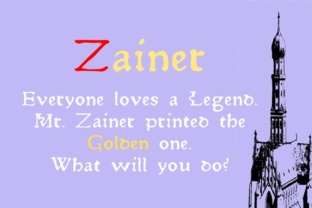
Zainer: A Modern Font Rooted in 15th-Century Printing Innovation
If you’ve ever worked on a project that needed to feel both historic and distinctly modern—a book design, a medieval-inspired brand, or a publication with a scholarly edge—you’ve probably scrolled through dozens of fonts that almost work. Some are too decorative, others too dry. Then there’s Zainer. This typeface takes its name directly from Günther Zainer, the first printer to set up shop in Augsburg, and it’s built around one of his more unusual and intriguing fonts. But don’t mistake it for a museum piece. Zainer has been reimagined for the way people actually work today, with over a thousand defined glyphs and deep support for the Medieval Unicode Font Initiative (MUFI) recommendations. That means it’s equally comfortable in a digital publication, a printed luxury catalog, or a classroom handout. Let’s look at where and why you might actually use it.
What Is Zainer?
Zainer is a typeface that pulls its DNA from the late 1460s, when Günther Zainer was printing roughly eighty works in a single decade. Most of his output served the clergy, but he also ventured into something more unusual: the first printed calendar and a large-scale illustrated book aimed at a general audience. The font that inspired Zainer was one of his more peculiar designs—full of character, with quirks that later typefounders smoothed away. The digital version you can use today has been expanded to include well over 1,000 glyphs, covering not only modern punctuation and diacritics but also historical characters and ligatures recommended by MUFI. That makes it a practical tool for anyone who needs to accurately represent medieval texts or create a design that evokes a pre-modern feel without sacrificing functionality.
Where and When You Might Reach for Zainer
Zainer isn’t a font you’d use for a grocery list or a quick social media meme. But when the project calls for something with weight, history, and a touch of the handcrafted, it fits naturally. Consider editorial design for a literary magazine that covers early modern history—the headlines and pull quotes set in Zainer immediately set a tone of seriousness without lapsing into cliché. Or think about a small publisher releasing a facsimile edition of a medieval chronicle. Zainer handles the unusual character forms and abbreviations that modern fonts often miss, so the text looks authentic even before you add the illustrations.
Digital content creators sometimes struggle to find fonts that read well on screens yet still look distinctive. Zainer’s enlarged character set includes modern figures and punctuation, so it works in long-form blog posts or online archives that mix contemporary commentary with quoted historical material. The same goe for educators preparing handouts for a course on the history of printing—the font itself becomes a teaching tool. Students can see exactly what kind of letterforms an early printer might have used, and the MUFI-compliant glyphs let you show them rare characters without relying on specialized software.
For Publishers and Book Designers
You’ve got a manuscript that’s set in the Holy Roman Empire during the 1470s. The narrative is full of Latin phrases, church documents, and references to early printed books. If you use a generic serif, the typography fights the story. Zainer, on the other hand, reinforces the period feel while keeping the text readable. Because it has over a thousand glyphs, you won’t run into missing characters when the author drops in a blackletter-like abbreviation or a medieval punctuation mark. The result is a book that feels carefully crafted, not cobbled together. And because Zainer is based on an actual historical type, you’re adding a layer of authenticity that can’t be faked with a simple distressed texture.
For Digital Content Creators and Bloggers
Maybe you run a niche blog about manuscript studies, calligraphy, or historical printing techniques. Every time you upload an image of a rare book, you wish your website’s headings could echo the look of the original. With Zainer, you can set your titles and pull quotes in a font that has genuine 15th-century roots, yet it includes modern numerals and accents that keep it from looking like a costume. If you ever need to display a runic character or a scribal abbreviation in a blog post, Zainer’s MUFI support saves you from hunting down a separate symbol font. It’s one less friction point when you’re trying to produce content that’s both accurate and visually appealing.
For Educators and Historians
Professors, curriculum designers, and museum educators often need to create handouts, slides, and interactive timelines that show how written communication evolved. Zainer is particularly useful here because it lets you demonstrate the transition from manuscript to print without switching fonts. You can show a student a line of text in a modern version of the same typeface Günther Zainer used for his 1468 calendar, and then run that same text through a screen-friendly weight for an online module. The historical glyph set means you can accurately display characters that appear in documents from the period, which helps learners connect the visual form of the letter to the technology that produced it. It’s not just a font; it’s a primary source in digital form.
For Small Business Owners and Marketers
Let’s say you own a craft brewery that specializes in medieval-inspired ales, or a stationery shop that prints wedding invitations with hand-drawn details. Zainer can anchor your branding with a typeface that feels aristocratic and old-world without being fussy. Because it includes many weights (depending on the version you license), you can use a bold variant for your logo, a regular one for body text on your website, and a light one for fine print on labels. The MUFI characters are less relevant here, but the sheer number of defined glyphs means you’ll never get stuck typesetting a foreign name or a special character. The font scales well to small sizes, so it stays legible on a beer bottle label or a 5″ business card. And when your customers see the detail, they’ll sense that you’ve put real thought into every aspect of your brand.
What to Consider Before Using Zainer
No font works for everything, and Zainer is no exception. Its historical flavor can feel out of place in a high-tech startup deck or a minimalist architecture brochure. If your project calls for absolute neutrality or maximum readability on cheap paper, a more mainstream serif like Garamond or Baskerville might serve you better. Also, because Zainer includes so many glyphs—especially the MUFI-recommended ones—the file size can be larger than typical web fonts, which may affect page load times if you use it for body text online. For most people, the best approach is to reserve Zainer for headings, display text, or short passages where its character can shine, and pair it with a simpler font for sustained reading.
Another practical point: make sure the version you acquire includes the specific glyphs you need. Some foundries offer Zainer with subsets, so if you require full MUFI coverage for academic work, confirm that before you buy. If you’re using it purely for its aesthetic, the standard character set is almost certainly enough. And because the font is rooted in a typeface from the 1460s, some letters—like the long ſ (the medial s)—may be present as stylistic alternates. Decide whether you want to use that feature or not. In historical reproductions, long s can be essential; in a modern brochure, it might confuse readers.
Connecting Historical Features to Everyday Outcomes
The strength of Zainer isn’t that it looks old. It’s that it works new. Günther Zainer printed for a broad audience—clergy, yes, but also everyday people who wanted a calendar or a large illustrated book. That same spirit of accessibility carries through to the digital version. When you use Zainer, you’re tapping into a tradition where type was designed to be both functional and expressive. The large glyph set isn’t just a checkbox; it means you can set a page of Latin text with proper abbreviations and then turn around and set a modern multilingual catalog with the same font. No switching, no missing letters, no compromises.
For the blogger writing about illuminated manuscripts, Zainer means your excerpts look right—every rounded “d” and tailored “g” matches the period you’re describing. For the publisher planning a deluxe edition of a 15th-century travel narrative, Zainer means the book feels housed in its own era without resorting to gimmicks. For the student of typography, it’s a living example of how a printer from Augsburg shaped letterforms that still have a job to do more than five centuries later.
If you’re someone who spends time choosing fonts carefully—because you know the right one can carry meaning all by itself—then Zainer deserves a spot in your library. It’s not for every project, but for the ones that need a link to the dawn of print, it’s exactly the tool you didn’t know you were missing. Download a trial, try it on a headline or a short document, and see if it carries the weight you’re after. Most likely, it will.