Rosedita Brings Handwritten Warmth to Digital Projects
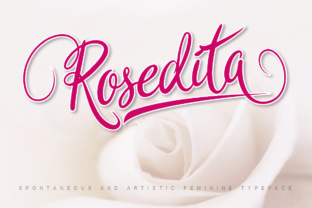
There is something about a handwritten note that feels personal in a way typed text rarely does. That is the effect Rosedita aims to capture. The Rosedita Script is a handwritten calligraphy font designed to bring that human touch into digital spaces without requiring you to actually write anything by hand. Whether you are designing invitations, building a brand identity, or putting together social media content, this font gives your work a natural, flowing look that feels less like a template and more like something someone sat down and wrote with care.
Where Rosedita Fits Into Real Projects
One of the first places people turn to a script like Rosedita is wedding stationery. Save-the-dates, invitations, thank-you cards, and place names all benefit from lettering that feels celebratory and intimate. But the font is not limited to once-in-a-lifetime events. Small business owners use it regularly for menu boards, signage, and product labels where they want to communicate quality and attention to detail. A coffee shop branding its cold brew bottles with Rosedita says something different than one using a standard sans-serif. The font sets a tone before anyone reads a single word.
Bloggers and content creators also reach for Rosedita when they want to emphasize a quote or highlight a section headline. It works well as an accent font paired with a clean, readable body typeface. That combination keeps the overall design polished while letting the script add personality. For anyone running a lifestyle blog, a wellness account, or a creative portfolio, this approach helps content feel more curated and less mass-produced.
Event Planners and Hospitality Professionals
Event planners often need to produce materials that feel exclusive and thoughtfully designed. A single font choice can elevate a simple flyer into something that looks like it belongs at a high-end venue. Rosedita works especially well for event names, date lines, and short phrases that need to stand out. Planners in the wedding and corporate event space alike use it for programs, seating charts, and welcome signs. The script's readability at medium to large sizes makes it practical for printed signage, not just digital mockups.
Hotels and boutique hospitality brands also benefit from the font's handcrafted look. Room service menus, welcome notes, and amenity cards feel more personal when they appear to be written rather than printed. Guests respond to that kind of detail. It signals that the property puts thought into the experience, not just the amenities.
Different Users, Different Needs
Not everyone who uses Rosedita comes from the same background, and that is part of why it has found such a wide audience. Here is how different types of users tend to approach it:
- DIY creators use the font for personal projects like birth announcements, holiday cards, and custom gifts. They value how quickly they can achieve a professional look without hiring a designer.
- Graphic designers use Rosedita as part of a larger toolkit. They pair it with serif or sans-serif fonts and use it sparingly to create contrast and visual hierarchy.
- Social media managers apply it to quote graphics, story highlights, and promotional posts. The script's flowing style helps content feel more relatable and less corporate.
- Product designers working on packaging or merchandise often choose Rosedita for its balance between elegance and legibility. It works in small spaces like tags or labels without becoming unreadable.
- Etsy sellers and small shop owners integrate it into their branding assets, from logos to product photos. It helps them stand out in crowded marketplaces where visual consistency matters.
Practical Examples From Everyday Use
Imagine you are putting together a portfolio for a creative freelance business. A clean, minimal layout with a few headings in Rosedita immediately signals that you care about aesthetics. It does not overpower the work you are showcasing, but it frames it well. Or consider a fitness instructor building a brand around wellness and mindfulness. Using the font on class schedules, Instagram posts, and email headers creates a cohesive visual identity that feels approachable and intentional.
For someone planning a baby shower, Rosedita can be used for the invitation, the thank-you tags, and even a banner for the event. The consistency across those pieces makes the whole event feel coordinated without requiring a designer or a big budget. That kind of application is where the font really shines, because it solves a practical problem while also elevating the look of the project.
What to Consider Before Choosing Rosedita
As much as Rosedita brings to a project, there are a few things worth thinking about before committing to it. First, consider the context of the text you are setting. The font works best for shorter phrases and headlines. Long paragraphs set in a script can quickly become hard to read, especially at smaller sizes. If you need to communicate a lot of information, keep the script to titles and use a complementary font for body text.
Another consideration is the audience. Script fonts can feel formal or romantic, which is perfect for weddings and high-end events, but may not suit every industry. A tech startup or a law firm likely wants something more neutral. In those cases, Rosedita might feel out of place unless it is used very sparingly for a specific brand element like a logo or a tagline.
Strengths That Stand Out
One of Rosedita's strongest qualities is its readability relative to other calligraphy fonts. Many scripts sacrifice clarity for flair, making it difficult to tell letters apart. Rosedita keeps its flourishes under enough control that the words remain recognizable even at moderate sizes. That makes it practical for real-world use, not just decorative display.
The font also handles a wide range of characters well. If your project includes numbers, punctuation, or accented letters, you will find that the consistency across the set holds up. That matters when you are designing something like a bilingual menu or an event schedule that includes dates and times.
Limitations Worth Knowing
On the other hand, Rosedita may not be the best choice for projects that require heavy mixing of uppercase and lowercase styles in unusual ways. Like most handwritten scripts, it follows a natural flow that can be broken by aggressive formatting. If you plan to use all caps extensively, you may find that the font loses some of its charm because it was designed to mimic natural handwriting rather than block lettering.
Additionally, because the font is based on real handwriting, it does not include the same kind of mechanical uniformity you get with geometric typefaces. That is part of its appeal, but if you are working on a project that demands strict symmetry or ultra-modern minimalism, you may want to look elsewhere or limit Rosedita to accent use only.
Choosing the Right Pairings and Settings
When you use Rosedita, the fonts and colors you pair it with will shape the overall impression. Soft, neutral backgrounds let the script stand out without competing. Light pastels, warm creams, and muted earth tones tend to complement the handwritten look well. On the other hand, pairing it with a heavy, dark backdrop can make the finer details of the strokes harder to appreciate.
For font pairings, many designers reach for clean sans-serifs like Open Sans, Lato, or Montserrat. These provide a solid contrast without stealing attention from the script. Serif fonts can also work, especially if you are going for a more traditional or literary feel. Just avoid pairing Rosedita with another script unless you are very intentional about the hierarchy, because two competing handwriting styles can confuse the eye.
Making It Work in Professional Contexts
If you are using Rosedita in a professional setting, think about consistency across your materials. A logo that uses the font should carry through to your website headers, social media graphics, and any printed collateral. That repetition builds recognition. But also give the font room to breathe. Overusing it across every element can make a design feel busy rather than cohesive.
For presentations, Rosedita works well on title slides, section dividers, and callout quotes. It adds a human element to what might otherwise be a dry slide deck. Just keep the body text in a clean, readable font so your audience can follow along without strain.
Finding Your Own Way to Use It
The best projects using Rosedita tend to be the ones where the creator understood what the font does naturally and leaned into it. It is not a neutral typeface. It carries personality and intention. When you use it, you are telling your audience that you care about how things look and feel. That works whether you are designing for yourself, a client, or a brand.
Experiment with scale, color, and layout to see how the font behaves in different contexts. Try it on a large poster, then on a small label. Use it on a warm-toned background, then on a cool one. Notice how the same letters can feel romantic, nostalgic, modern, or rustic depending on the environment you put them in. That flexibility is what makes Rosedita a practical tool for a wide range of real-world projects.