Inversus: A Slab Serif Font That Commands Attention
Typography can make or break a project. The right typeface does more than carry words—it sets a mood, reinforces a message, and signals professionalism. Inversus is a slab serif font that delivers on all fronts. With bold, geometric shapes and clean edges, it brings a commanding presence to any layout. Whether you are designing a brand identity, crafting a poster, or developing product packaging, Inversus offers a combination of strength and elegance that stands out without shouting.
Slab serifs have a long history in print and display design. They evoke durability, confidence, and a touch of tradition. Inversus modernizes that legacy with sharp contours and balanced proportions, making it suitable for both digital and physical applications. But what does that mean for you? Depending on your role and goals, Inversus can serve different needs in different ways.
What Makes Inversus Distinctive
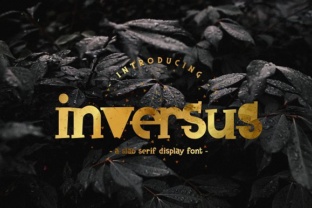
At its core, Inversus is a display-oriented slab serif. Its letterforms feature substantial serifs—those rectangular feet at the ends of strokes—that give each character weight and stability. The spacing is generous enough to remain legible at larger sizes, while the overall design avoids unnecessary ornamentation. This restraint is what makes Inversus versatile. It can anchor a bold headline or add character to a short block of text without feeling cluttered.
The font includes multiple weights and stylistic alternates, allowing you to fine-tune the voice of your project. A heavier weight might convey authority for a corporate brochure, while a lighter version could bring warmth to a lifestyle brand. For designers who value consistency, Inversus maintains its personality across sizes and contexts, which reduces the guesswork during layout development.
Why Beginners Appreciate Inversus
If you are new to typography, choosing a font can feel overwhelming. There are thousands of options, and the subtle differences between them are not always obvious. Inversus simplifies that decision. Its slab serif structure is instantly recognizable, so you do not need a deep design background to use it effectively. The font pairs well with neutral sans-serifs like Helvetica or Open Sans, which means you can build a complete visual system without buying multiple typefaces.
Beginners often worry about readability. Inversus is designed for display purposes—titles, headings, short quotes, and logos—so you can trust it will look clean at larger point sizes. For a small business owner creating their first flyer or a student working on a presentation, Inversus reduces the risk of ending up with something that looks amateurish. It gives a polished result with minimal effort.
Another advantage for newcomers is the availability of user-friendly formats. Inversus typically comes in OTF and TTF files that work in standard software like Canva, Adobe Express, Microsoft Office, and Google Docs. You do not need advanced design tools to start experimenting. Drop it into a design platform, adjust the size, and see immediate impact.
How Professionals and Creators Use Inversus
Experienced designers and creative professionals look for flexibility, consistency, and distinctiveness. Inversus delivers on all three. Its slab serif structure provides a strong baseline, while alternate glyphs and ligatures allow for customization. A branding specialist might use Inversus to build a logo that feels both established and contemporary. The font's geometric precision makes it a natural fit for industries like architecture, engineering, finance, and technology, where clarity and authority matter.
For poster designers, Inversus shines at large scale. A concert poster, event announcement, or movie title benefits from the font's heavy serifs and open counters. The letters remain readable even from a distance, and the visual weight commands attention on a crowded wall or social media feed. When combined with bold colors or photographic backgrounds, Inversus holds its ground without overwhelming the composition.
Packaging designers also find value in Inversus. Shelf appeal depends on quick recognition. A product name set in Inversus feels substantial and trustworthy. For a premium food brand, a craft beverage label, or a luxury skincare line, the font adds tactile permanence even before the customer picks up the package. The slab serif style suggests quality and care, which aligns with products that emphasize craftsmanship or heritage.
Publishers and editorial designers occasionally use slab serifs for pull quotes, section headers, or magazine covers. Inversus brings a modern twist to this tradition. Its clean lines work well in both print and digital layouts, and the range of weights gives editors room to create hierarchy without switching typefaces. A travel magazine might use Inversus for destination headlines, while a tech publication could rely on it for feature titles.
Educators and Hobbyists: Learning Through Practice
Typography is a skill best learned by doing. Educators teaching graphic design or visual communication can use Inversus as a case study in slab serif anatomy. Students can examine how serif shape, stroke contrast, and spacing affect tone and readability. Because Inversus is a contemporary take on a classic style, it invites discussion about how design evolves while still respecting tradition.
Hobbyists—whether they design T-shirts for fun, create social media content, or build personal blogs—appreciate fonts that perform well without requiring constant tweaking. Inversus works for these casual projects because it is forgiving. A hobbyist making a birthday invitation or a custom mug will see professional-looking results with basic layout skills. The font adds value to personal projects without demanding a steep learning curve.
For someone who enjoys lettering or calligraphy as a pastime, Inversus offers inspiration. Its slab serif forms can be studied and reinterpreted by hand, helping hobbyists understand proportion and rhythm. Even if you never use the font digitally, examining its construction can improve your analog lettering work.
Commercial Value and Long-Term Usefulness
Investing in a typeface is different from buying a one-time asset. A quality font like Inversus can serve multiple projects over years. For a freelancer who takes on varied work—branding, packaging, social media graphics—owning a versatile slab serif reduces the need to license new typefaces for every client. The upfront cost pays off through repeated use and consistent branding across campaigns.
Small business owners face a similar calculus. A logo, website headers, product labels, and printed materials all benefit from cohesive typography. Inversus provides that unity. If your business sells physical goods, the font on your packaging becomes part of your brand identity. Customers who see consistent, well-designed type across your website and store shelves are more likely to perceive your business as reliable and professional.
From a licensing perspective, Inversus is typically available as a desktop license for personal and commercial use, with options for web and app embedding depending on the foundry. Checking the specific license terms matters, but most versions allow broad application. This flexibility makes Inversus a practical choice for entrepreneurs who want to avoid legal headaches while scaling their brand.
Quality and Reliability Considerations
When evaluating any font, quality goes beyond aesthetics. Technical reliability includes things like proper kerning, consistent glyph heights, and smooth curves at multiple sizes. Inversus is engineered with attention to these details. The font handles well in print, with clean edges that reproduce accurately at various resolutions. On screen, it maintains legibility in standard web formats, provided you use appropriate sizes for display purposes.
Another reliability factor is cross-platform compatibility. Inversus works on both macOS and Windows, and it integrates with major design software like Adobe Creative Cloud, Affinity Suite, Figma, and Sketch. For teams collaborating across different operating systems, this consistency prevents workflow disruptions. You can share project files without worrying that the font will render differently on a colleague's machine.
Is Inversus Right for Your Project?
The answer depends on your goals, audience, and medium. Inversus excels in contexts where you need a strong typographic voice. If you are designing something that will be seen at a distance—a poster, a billboard, a trade show banner—the slab serif structure ensures impact. If your project involves digital content that relies on quick scanning, like a landing page headline or a YouTube thumbnail, Inversus draws the eye effectively.
However, Inversus is not designed for long-form reading. Its display nature means it performs best at larger sizes. For body text in a book or a lengthy article, a traditional book font or a neutral sans-serif would be more comfortable. Knowing this limitation helps you use Inversus where it adds the most value and avoid forcing it into roles where it might feel heavy.
For creators working on merchandise like T-shirts, hoodies, or tote bags, Inversus is especially strong. The bold shapes translate well to screen printing and embroidery. A short slogan or brand name in Inversus becomes a wearable statement. Similarly, for stickers, pins, or other small-format items, the font's clarity at reduced sizes helps maintain readability.
Marketers and bloggers can use Inversus to build visual hierarchy in social media graphics. A bold headline in Inversus paired with a clean sans-serif body creates contrast that guides the viewer's attention. This technique works for Instagram posts, LinkedIn banners, email headers, and YouTube channel art. The font's personality adds professionalism without requiring elaborate illustration or photography.
Practical First Steps with Inversus
If you are considering Inversus for an upcoming project, start by downloading the free trial if one is available. Test it with your actual content—a logo draft, a poster headline, a product name. Pay attention to how it interacts with your other design elements. Adjust tracking and leading to find the sweet spot where the font feels balanced.
Pair Inversus with a clean sans-serif for contrast. Good companions include Montserrat, Roboto, or Lato for digital work, and Helvetica or Arial for print. Avoid pairing it with another slab serif, as the similarity can create visual competition. Instead, let Inversus be the star in your headlines and let a simpler font handle supporting text.
Color also matters. Inversus works well in bold, saturated hues—deep reds, navy blues, forest greens—as well as neutral tones like charcoal, cream, or metallic shades. The font's structure gives it presence even in black and white, so monochrome projects remain effective. Experiment with white text on dark backgrounds for a dramatic look, or dark text on light backgrounds for a more traditional feel.
Finally, consider the emotional tone you want to convey. Inversus leans toward confident, grounded, and approachable. It is not overly formal or ornate, which means it can work for both corporate and creative audiences. A real estate developer might use it to suggest stability, while a craft brewery could rely on it to communicate authenticity. Understanding that range helps you deploy Inversus with intention.
Long-Term Value for Growing Brands
As a business or personal brand evolves, typography needs may change. A font that serves you at startup can become part of your visual identity for years. Inversus offers that longevity because its design is neither trendy nor dated. It occupies a middle ground—modern enough to feel current, traditional enough to endure. Businesses that rebrand every few years often shift typefaces, costing time and confusing customers. Choosing a slab serif like Inversus from the start can reduce that friction.
For freelancers who take on diverse clients, having a reliable display font in your toolkit saves money and mental energy. You learn how it behaves, what sizes work best, and how to pair it effectively. That familiarity speeds up your workflow and lets you focus on concept and composition rather than troubleshooting font issues.
Ultimately, Inversus earns its place in a designer's library by being versatile without being generic. It has a point of view, but it respects the content. Whether you are a beginner taking your first steps in layout or a seasoned professional refining a brand system, Inversus provides a solid foundation that invites creativity. Try it on a small project first. With a slab serif this striking, you may find yourself reaching for it again and again.