Young Love: A Modern Handwritten Font for Branding That Actually Works
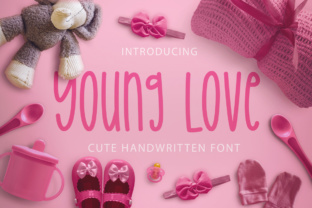
When you first see Young Love, it’s easy to understand the appeal. This modern handwritten font carries an effortless charm—looping curves, natural stroke variation, and a warmth that feels personal rather than mechanical. Designers, small business owners, and content creators are drawn to it because handwritten fonts promise authenticity in a world of polished, generic typefaces. But that same appeal can lead to missteps. Without understanding how a font like Young Love behaves across mediums and contexts, you risk undermining the very message you want to strengthen.
Let’s walk through the practical side of using Young Love—what works, what doesn’t, and how to avoid the common mistakes that turn a charming font into a design liability.
Why Young Love Deserves a Spot in Your Toolkit
Young Love is not just another handwritten font. It’s built with modern branding in mind. The letterforms strike a balance between playful and refined, making it suitable for product packaging, social media graphics, website headers, and even printed collateral like greeting cards or posters. Unlike many handwritten fonts that feel too casual or incomplete, Young Love includes enough consistency to be usable without looking messy.
Its strength lies in conveying emotion—warmth, intimacy, approachability. For brands that want to feel human rather than corporate, Young Love can be a powerful asset. But that only holds true when it’s applied with intention.
Mistake #1: Treating Young Love Like a Workhorse Font
The most common error is using Young Love for body text. It’s tempting—the font is beautiful, so why not use it everywhere? The problem is readability. Handwritten fonts, by nature, have uneven spacing, varied stroke widths, and decorative flourishes that slow down reading at small sizes. When you set a paragraph in Young Love, readers have to work harder to parse each word. That friction undermines comprehension and can frustrate your audience.
Better approach: Reserve Young Love for display use—headlines, pull quotes, short taglines, or hero text. For body copy, pair it with a clean sans-serif or serif font. Something like Lato, Open Sans, or even a classic like Garamond provides contrast and gives the eye a rest. This pairing respects Young Love’s personality while keeping your message accessible.
Mistake #2: Ignoring Medium-Specific Behavior
Young Love works digitally and in print, but it doesn’t behave identically in both. A common oversight is assuming what looks crisp on screen will print the same way. On a high-resolution monitor, thin strokes and fine details show up clearly. On uncoated paper or at small print sizes, those same details can blur, fill in, or become illegible.
Practical advice: always test the font at your intended output size. If you’re designing for print, choose a heavier weight if available, or increase the point size slightly. In digital contexts, check how the font renders on different browsers and devices—especially mobile screens, where handwritten fonts can appear grainy or uneven.
One experienced designer I know prints a test sheet at actual size before finalizing any project with a handwritten font. It sounds simple, but it saves time, money, and disappointment.
Mistake #3: Overlooking Licensing and Usage Rights
Young Love is a commercial font, and like most typefaces, it comes with specific license terms. A mistake new buyers make is assuming one license covers all use cases. That can lead to problems if you later want to embed the font in a mobile app, use it in merchandise, or offer it as part of a template for resale.
Before downloading or buying, check:
- Does the license cover web use? If so, how many page views or domains?
- Is print usage unlimited, or are there copy limits?
- Can you use it in logo files that become part of a brand identity?
- Do you need an extended license for commercial products or digital ads?
These details vary by foundry and vendor. Spending five minutes reading the license agreement prevents legal headaches and unexpected costs later. If you’re unsure, contact the seller directly—most foundries are responsive and happy to clarify.
Mistake #4: Choosing Style Over Brand Fit
Young Love has a distinct personality. That’s its strength, but also its limitation. Not every brand or project benefits from a handwritten look. A common mistake is choosing a font purely because it looks beautiful, without considering whether it aligns with the brand’s voice or the message’s tone.
For example, a financial advisory firm or a medical practice likely needs a more restrained, trustworthy typeface. Handwritten fonts can feel too informal or emotionally driven for contexts that demand authority and precision. On the other hand, a bakery, wedding planner, or children’s brand can lean into Young Love’s warmth naturally.
Before committing, test the font in a realistic mockup. Does the tone match the brand’s core message? Would the audience take the content seriously? If the font creates a mismatch, the entire design loses credibility—no matter how beautiful the letterforms are.
Mistake #5: Using Young Love in Isolation Without Contrast
Another overlooked detail is visual hierarchy. When every element uses the same handwritten style, the design becomes flat. The eye has no clear path from headline to subhead to body text. This lack of contrast makes the content harder to scan and reduces engagement.
A better approach is to build a typographic hierarchy. Use Young Love for the primary headline. Choose a complementary sans-serif for subheadings and body copy. Add a third typeface sparingly—perhaps a geometric sans for data or labels—if the project calls for it. This creates visual rhythm and guides the reader naturally through the content.
Consider this example: a product page for a handmade candle brand. The product name uses Young Love in a warm tone. The scent notes are set in a clean sans-serif like Montserrat. The price and call-to-action button use a bold weight of the same sans-serif. The contrast makes the page feel intentional and easy to navigate.
Mistake #6: Neglecting Character Set and Language Support
This is a detail many creators miss until it’s too late. Some handwritten fonts have a limited character set. If your project requires accented characters, special punctuation, or supports multiple languages, the font may not cover everything you need. The result is awkward gaps or mismatched fallback fonts that break the design’s coherence.
Before finalizing Young Love for a multilingual campaign or a global brand, check its glyph coverage. Most reputable foundries list this information clearly. If you need extended language support, look for a version that includes Latin Extended-A or beyond. If the font doesn’t cover all your needs, you may need to use it only for English text and rely on a different font for other languages—or adjust your design to work within its limitations.
Practical Checklist Before You Use Young Love
To avoid the most common pitfalls, run through this quick list before you commit to Young Love in any project:
- Test at actual size in both digital and print mockups.
- Read the license and confirm it covers your specific use cases.
- Pair it with a neutral, highly readable font for body text.
- Verify character set and language support if needed.
- Evaluate brand alignment—does the tone fit the audience and message?
- Build hierarchy with different weights, sizes, and contrasting typefaces.
These steps don’t take long, but they dramatically improve the final result. They also save you from redesigning later because something didn’t work in practice.
Making Young Love Work for You
Young Love is a solid choice when used correctly. It brings personality, emotion, and a human touch that many brands crave in an increasingly digital landscape. But its effectiveness depends entirely on how you deploy it. Treat it as a special effect—applied deliberately and sparingly—rather than a default setting.
The best designers I know respect fonts the way they respect color or photography. They understand that every typeface carries a voice. Young Love’s voice is warm, personal, and unpolished in the best way. Use it when that voice serves the message. Pair it with supporting typefaces that let it breathe. Test it in the environment where your audience will encounter it. And always, always read the fine print.
When you approach Young Love with that level of care, it stops being just another font. It becomes a genuine tool for communication—one that helps your work stand out without sacrificing usability or quality.