Swizzlesticks: A Handcrafted Font with Real Personality
Every now and then, a typeface comes along that doesn't just sit on the page—it speaks. Swizzlesticks, a beautiful handcrafted font created by Creativeqube, is one of those rare finds. It has warmth, it has quirks, and it carries the unmistakable imprint of a human hand. For designers, small business owners, and content creators who are tired of sterile, mass-produced typography, this font offers something refreshingly genuine.
What Makes Swizzlesticks Stand Out
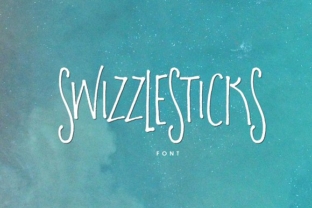
Swizzlesticks belongs to the handwritten font family, but it doesn't try to mimic calligraphy or pretend to be a polished script. Instead, it embraces a playful, slightly irregular stroke quality that feels organic and unforced. The letterforms have a charming bounce—ascenders and descenders vary just enough to keep the eye moving without sacrificing legibility. You get the sense that each character was drawn with intention, not generated by an algorithm.
Visually, Swizzlesticks leans toward a relaxed, whimsical personality. It's not a font that fades into the background. It demands attention, but in a friendly, approachable way. The contrast between thick and thin strokes is subtle, giving it a soft, almost tactile quality. If you run your eyes over a word set in Swizzlesticks, you can almost feel the pen gliding across paper. That's the kind of emotional resonance that makes a handwritten font so effective in branding and editorial work.
Where Swizzlesticks Shines in Real Projects
One of the first things you notice when working with Swizzlesticks is its versatility. While it's clearly a display font at heart—best used for headlines, titles, and short bursts of text—it adapts surprisingly well to different contexts. Here are a few places where it truly delivers:
- Logo design and brand identity: Swizzlesticks brings a handcrafted, artisanal feel to logos. It works beautifully for coffee shops, bakeries, boutiques, stationery brands, and creative studios that want to communicate authenticity and craftsmanship.
- Editorial design and publishing: Magazine covers, blog headers, and book titles benefit from the font's warm, inviting character. It pairs especially well with clean sans serif fonts or subtle serif fonts for body text, creating a nice visual hierarchy.
- Packaging design: Product packaging—especially for artisanal goods, handmade soaps, organic foods, or gift items—gains a human touch with Swizzlesticks. It suggests that a real person was involved in the making, which resonates with modern consumers.
- Social media graphics: Instagram posts, Pinterest pins, and Facebook covers all benefit from typography that stands out in a crowded feed. Swizzlesticks adds personality to quotes, announcements, and promotional graphics without looking overly commercial.
- Web design: While it's not ideal for long body copy on websites, Swizzlesticks works wonderfully for hero section headlines, call-to-action buttons, and navigation accents. It injects warmth into digital spaces that often feel cold and templated.
- Personal and hobby projects: Invitations, greeting cards, scrapbook layouts, and DIY projects feel instantly more special when you use a font that looks like it was written by hand. Swizzlesticks elevates personal work without requiring any design skills.
How Swizzlesticks Influences Readability and Brand Perception
Typography is never just about looking good. Every typeface carries subtext, and Swizzlesticks is no exception. When you choose this font, you're sending a signal—one that says, “We care about the details, and we value real human connection.”
For brand identity, that perception is gold. In an era where consumers are bombarded with polished, impersonal marketing, a handwritten font like Swizzlesticks cuts through the noise. It feels honest. It feels small-scale, even when it's used by a larger business. That emotional shift can directly impact audience engagement—people are more likely to pause, read, and remember content that feels handcrafted rather than factory-produced.
From a readability standpoint, Swizzlesticks performs well for short to medium-length text. The letter spacing is generous enough to prevent crowding, and the consistent baseline helps guide the eye naturally. That said, it's not a font you'd want to set an entire article in. Reserve it for moments where you want to emphasize personality—headlines, pull quotes, product names, or signature elements. This creates a clear visual hierarchy in your layout, guiding readers to the most important pieces of information first.
Practical Guidance for Choosing and Using Swizzlesticks
Before you commit to a font for a project, it pays to test it thoroughly. Here's how to evaluate whether Swizzlesticks is the right fit for your next design:
Evaluate Your Project's Tone and Audience
Swizzlesticks works best when your brand or message leans casual, creative, or heartwarming. If you're designing for a law firm, a financial institution, or a technical documentation site, this probably isn't your first choice. But for lifestyle brands, creative agencies, children's products, event invitations, and social media content, it's a natural match. Think about who your audience is and what emotional response you want to trigger.
Test Font Pairings Thoroughly
A handwritten font like Swizzlesticks needs a stable partner. Pair it with a neutral sans serif font (think Montserrat, Open Sans, or Lato) for a balanced, modern look. If you're going for a more classic feel, a subtle serif font like Merriweather or Playfair Display can provide a nice contrast. Avoid pairing it with another heavily stylized script—you'll lose hierarchy and create visual confusion. Test your pairings at different sizes and in different contexts (digital, print, mobile) to ensure consistency.
Review Included Styles and Weights
Swizzlesticks comes with a standard set of characters, including uppercase, lowercase, numerals, and punctuation. Before you start a project, check whether the font includes the specific glyphs you need—especially if you're working with languages that use accented characters or special punctuation. Knowing the full character set upfront prevents surprises halfway through your design.
Consider Readability at Different Scales
Because of its handcrafted nature, Swizzlesticks performs best at larger sizes—typically 24 points and above. At smaller sizes, some of the nuanced stroke variations can become muddled, especially in print. If your project requires fine text, use a simpler companion font for those elements. For headlines, banners, and hero text, Swizzlesticks will shine.
Check the Commercial Licensing
If you're using Swizzlesticks for client work, branding, or any revenue-generating project, make sure you have the appropriate commercial font license. Creativeqube typically offers standard and extended licensing options. A standard license usually covers most small business and freelance projects, but if you're embedding the font in apps, e-books, or merchandise, you may need an extended license. Always read the terms carefully—it saves headaches down the road.
Test Across Media
Swizzlesticks may render slightly differently on screen versus in print. Test it on a variety of devices (desktop, tablet, phone) and in different output formats (PDF, web, physical print). Pay attention to how the stroke weight and spacing hold up. A font that looks charming in a mockup might feel too heavy or too light when printed on matte paper. Adjust tracking and leading as needed.
Real-World Examples That Work
Imagine a small bakery rebranding for a more artisanal feel. The owners replace their generic script logo with something set in Swizzlesticks, paired with a clean sans serif font for menu items. Suddenly, the brand feels approachable, homemade, and worth visiting. Or consider a lifestyle blogger who uses Swizzlesticks for post titles across social media and her website. The font becomes a signature element—readers recognize it instantly, and it reinforces her personal brand without her having to say a word.
For packaging design, Swizzlesticks works wonders on product labels for small-batch goods. A jar of honey, a box of tea, or a bottle of hot sauce suddenly looks like it was labeled by the person who made it. That human connection is hard to achieve with a standard commercial font, but Swizzlesticks delivers it naturally.
A Few Design Observations Worth Keeping in Mind
One thing seasoned designers notice when working with Swizzlesticks is how well it handles negative space. Because the letterforms aren't perfectly uniform, they create interesting pockets of air around them. This makes the font ideal for layouts that rely on white space—think minimalist product pages, editorial spreads, or clean social media posts. The contrast between the relaxed, hand-drawn letters and a structured grid is visually compelling.
Also worth noting: Swizzlesticks has a slightly playful incline. The letters lean forward just a touch, which gives it a sense of motion and energy. This works beautifully for projects that want to convey enthusiasm, creativity, or spontaneity. If your brand tone is more reserved or formal, however, that lean might feel out of place. Trust your instincts—if the font feels like it's pulling in a direction that doesn't match your message, it's probably not the right fit.
Swizzlesticks is more than just a pretty typeface. It's a tool for building connection, expressing personality, and standing out in a world of visual sameness. Whether you're a designer refining a client's brand identity, a small business owner creating packaging that feels personal, or a content writer looking to add warmth to your online presence, Swizzlesticks offers a genuine, handcrafted alternative to the usual lineup of digital fonts. Give it room to breathe, pair it thoughtfully, and let it do what it does best—make your words feel human again.