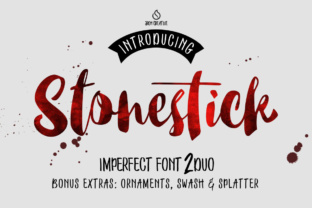
Stonestick: A Hand-Painted Font with Character and Ornamental Charm
Every designer, marketer, or content creator knows the struggle of finding a typeface that feels genuinely original. You browse through endless libraries, and so much of it starts to blur together—clean sans-serifs, elegant scripts, and rustic slabs all begin to feel familiar after a while. That is exactly why a font like Stonestick deserves a closer look. It is not trying to blend in. It is hand-painted, it comes with regular caps, and it includes a bonus ornamental font that adds even more flexibility to your projects. Whether you are designing a brand identity, crafting social media graphics, or building a website that needs a distinctive voice, this typeface brings something tactile and human to the table.
What Makes Stonestick Stand Out
Stonestick is a hand-painted display font, and that handcrafted quality is immediately apparent. Unlike many digital fonts that feel mechanically perfect, Stonestick carries subtle irregularities—slight variations in stroke weight, a gentle unevenness in letterforms, and a texture that suggests real paint on a rough surface. These quirks are not flaws; they are the very reason the font feels alive. The regular caps are bold and sturdy, with a presence that commands attention without shouting. They work well for headlines, logos, and short blocks of text where you want each letter to land with weight.
What is particularly clever about this font is the included ornamental bonus. This is not an afterthought. The ornaments extend the hand-painted aesthetic into decorative elements—swirls, borders, flourishes, and small motifs that can frame your text, separate sections, or add visual interest to a layout. Together, the caps and ornaments form a cohesive system that makes it easy to build complete compositions without juggling multiple fonts.
One practical strength worth noting: the letterforms remain legible even when used at larger sizes. Hand-painted fonts sometimes sacrifice readability for personality, but Stonestick strikes a good balance. The caps are clear enough for a headline on a poster or a call-to-action button on a landing page, yet they retain enough texture to feel distinctive.
Practical Applications Across Different Fields
The real value of any font is how it performs in the wild. Stonestick is not a one-trick pony, and its uses stretch across personal, professional, and commercial contexts. Let me walk you through some realistic scenarios where it genuinely shines.
Branding and Logo Design
If you work with small businesses, startups, or creative entrepreneurs, you know how important it is to communicate a brand's personality visually. Stonestick works exceptionally well for brands that want to convey authenticity, craftsmanship, or a handmade ethos. Think of a local coffee roaster, a woodworking shop, a craft brewery, or an organic skincare line. The font's rough edges and painted texture suggest something made by hand, not mass-produced. When paired with the ornamental elements, you can build a complete visual identity—logos, tags, labels, and packaging—that feels cohesive and intentional.
For example, a small-batch hot sauce brand could use Stonestick for the product name on the label, with one of the ornamental borders wrapping around the bottle neck. The font's bold caps ensure the name is readable on a shelf, while the hand-painted quality reinforces the artisanal nature of the product. It is a straightforward application, but it is the kind of detail that makes a brand memorable.
Editorial and Print Design
Magazines, zines, brochures, and printed flyers benefit from typography that adds visual texture. Stonestick works well for pull quotes, section headers, and cover headlines. Because it is a display font, you will want to use it sparingly—letting it carry the visual weight of a page while pairing it with a simpler body font for longer text. The ornamental font is especially useful in print layouts. You can use decorative dividers between articles, frame a featured quote, or create a rustic border for a sidebar. These small touches elevate a layout from functional to memorable.
I have seen designers use the ornaments to create custom badges or stamped effects in print materials, which gives publications a unique tactile feel even on standard paper stock.
Digital Media and Web Design
Hand-painted fonts are becoming more popular in web and app design, particularly for hero sections, landing pages, and brand headers. Stonestick translates well to digital screens because its bold caps remain legible at various resolutions. The texture does not get lost, even on high-DPI displays. If you are building a website for a creative agency, a lifestyle blog, or an e-commerce store with a handmade angle, using Stonestick for your main headings can immediately signal your aesthetic values.
One recommendation: use the ornamental font sparingly in digital contexts. A decorative border or divider can look great, but too many ornamental elements can clutter a responsive layout. The sweet spot is using one or two ornaments as accent pieces—perhaps a small motif next to a navigation logo or a stylized separator between content sections.
Social Media and Content Creation
Content creators, bloggers, and social media managers are always looking for ways to make their graphics stand out in crowded feeds. Stonestick is excellent for quote cards, announcement posts, and cover images. Its bold caps ensure the text is readable as a thumbnail, while the hand-painted texture adds a layer of visual interest that plain sans-serifs lack. The ornamental font can be used to create subtle frames or decorative accents around your text, giving your graphics a consistent, branded look.
For example, a travel blogger could use Stonestick for destination names in Instagram stories or YouTube thumbnails. The handmade quality evokes a sense of adventure and authenticity, which resonates well with audiences looking for genuine experiences rather than polished, corporate content.
Usability and Practical Considerations
No font is perfect for every situation, and being honest about limitations helps you use Stonestick more effectively. Here are a few things to keep in mind.
It is a display font, not a text font. Do not use it for long paragraphs or body copy. The hand-painted texture and bold caps make it fatiguing to read at small sizes over extended text. Pair it with a clean, neutral sans-serif or serif for body text. This contrast actually makes the display font pop more.
The ornamental font requires thoughtful placement. The bonus ornaments are beautiful, but they are also distinctive. Use them as intentional design elements, not filler. A well-placed ornament can act as a visual anchor or a breathing point in a layout. Overusing them dilutes their impact.
Consider your audience and context. Stonestick has a rustic, handcrafted feel. It suits brands and projects that align with that aesthetic. If you are designing for a corporate law firm or a high-tech SaaS platform, it is probably the wrong choice. But for creative industries, hospitality, food and beverage, artisan products, or personal projects, it is a strong fit.
Licensing and file formats matter. Always check the licensing terms for commercial use, especially if you are using the font in branding, product packaging, or digital products for sale. Most high-quality hand-painted fonts come with standard desktop and web licenses, but it is worth verifying to avoid issues down the line.
The Hidden Value of a Bonus Ornamental Font
Ornamental fonts are often treated as a nice extra, but in practice, they can save you a significant amount of time and effort. Instead of sourcing decorative elements from separate libraries or creating them from scratch, you have a set of motifs that are designed to pair stylistically with the main font. This means your layouts look cohesive with less work. For a freelancer or a small business owner juggling multiple tasks, that efficiency matters. It is one less thing to figure out.
Beyond time savings, the ornamental font opens up creative possibilities you might not otherwise explore. Custom badges, stylized drop caps, decorative separators, and hand-drawn frames become quick additions to your toolkit. They add a level of polish that makes a design feel finished and intentional.
Final Thoughts on Choosing Stonestick
Selecting a font is rarely just about aesthetics. It is about finding a voice that matches the message you want to communicate. Stonestick offers a voice that is bold, handmade, and unapologetically textured. It is not trying to be invisible; it is trying to be present. For projects that benefit from that kind of presence, it is a practical and versatile choice.
The bonus ornamental font is not a gimmick—it is a genuine extension of the design system, and it adds real utility for anyone building cohesive brand materials, print layouts, or digital content. If you are looking for a font that brings warmth, personality, and a handcrafted feel to your work, Stonestick deserves a spot in your library. Use it deliberately, pair it with simpler typefaces for body text, and let its character carry the visual weight where it matters most.
At its core, this typeface reminds us that good design does not have to be sterile. Sometimes the most effective tool is one that leaves a little paint on its edges.