Staligrad: An Objective Review of the Hand-Crafted Font
Choosing the right typeface is a foundational decision in any design project. The font you select communicates tone, professionalism, and attention to detail before a single word is read. Among the many options available, Staligrad has drawn attention as a hand-crafted font that combines aesthetic elegance with practical versatility. This review takes an objective look at what Staligrad offers, the situations where it excels, and the tradeoffs you should consider before making it a staple in your design toolkit.
What Is Staligrad?
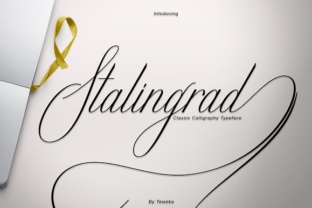
Staligrad is a carefully hand-crafted typeface designed to provide designers with a broad range of expressive characters. With 365 unique glyphs, it offers a level of variety that exceeds many standard fonts. Each glyph has been individually drawn, giving the font a distinctive, human quality that is difficult to replicate with purely algorithmic type design. The overall aesthetic leans toward elegance, making it suitable for projects where a refined, professional appearance is desired.
The font is not limited to a single style or weight. Instead, its 365 glyphs include alternate characters, ligatures, and ornamentation that allow for customisation within a single typeface. This means you can achieve a tailored look without switching between multiple fonts or styles. The hand-crafted nature of Staligrad means that no two characters feel mechanically identical, adding a subtle organic texture to any text block.
Reasons You Might Consider Staligrad
Designers and professionals looking for a typeface that stands out without being ostentatious often turn to Staligrad. Its elegance makes it a strong candidate for projects where first impressions matter. The font is particularly appealing if you value craftsmanship in your design assets. Knowing that each glyph was manually created rather than generated by software can add a layer of authenticity to your work.
Another reason for interest is the sheer number of unique glyphs. With 365 distinct characters, Staligrad reduces the risk of visual repetition, especially in longer texts or designs that require multiple instances of the same letter. This variety is especially useful for logos, headlines, and decorative elements where monotony can undermine impact.
The font also appeals to those who want a single solution that works across different project types. Instead of purchasing multiple specialised fonts, a designer can rely on Staligrad for a wide range of applications, from formal invitations to branding materials. This versatility can simplify your workflow and reduce the number of assets you need to manage.
Benefits and Tradeoffs
Like any design resource, Staligrad comes with both advantages and limitations. Understanding these can help you decide whether it aligns with your specific needs.
Benefits
- Visual distinction: The hand-crafted glyphs give Staligrad a unique character that is difficult to find in mass-produced fonts. Your designs will stand out without relying on gimmicks.
- Extensive glyph library: 365 unique glyphs provide flexibility for creative layouts, allowing you to experiment with alternates and ligatures to create a custom look.
- Consistent elegance: The font maintains a refined aesthetic across all characters, making it reliable for projects that demand a professional and polished appearance.
- Broad application range: Staligrad works well for both professional branding and personal craft projects, reducing the need to switch fonts between different types of work.
- Designed for readability: Despite its ornate qualities, the font remains legible at various sizes, which is a common concern with highly decorative typefaces.
Tradeoffs
- File size and performance: With hundreds of unique glyphs, the font file can be larger than standard typefaces. This may affect loading times on websites or performance in resource-intensive applications.
- Learning curve: Taking full advantage of the 365 glyphs requires familiarity with OpenType features and how to access alternates in your design software. Casual users may not utilise the font's full potential.
- Not ideal for all contexts: While elegant, Staligrad may feel out of place in ultra-modern or minimalist designs that call for clean, geometric sans-serif fonts. Its hand-crafted character adds warmth, but that warmth isn't always appropriate.
- Licensing considerations: Hand-crafted fonts often have specific licensing terms. Be sure to review the usage rights for commercial projects, especially if you plan to embed the font in digital products or sell templates.
Where Staligrad Is a Strong Fit
Staligrad shines in projects where elegance, craftsmanship, and a personal touch are valued. Here are some specific scenarios where it is likely to be a strong choice:
- Hospitality and dining menus: If you are designing a menu for an Italian restaurant or a fine-dining establishment, Staligrad's refined look can complement the ambiance and elevate the perceived quality of the establishment.
- Wedding invitations and stationery: The font's graceful curves and ornate alternates make it well-suited for formal event materials. Couples and planners seeking a classic, romantic feel often gravitate toward typefaces like Staligrad.
- Branding for professional services: Law firms, consulting agencies, and high-end boutiques can use Staligrad to communicate sophistication and reliability. It works particularly well for logos, letterheads, and business cards.
- Craft and handmade product labels: For artisanal products such as soaps, candles, or gourmet foods, the hand-crafted nature of the font aligns with the handmade ethos of the products themselves.
- Decorative headlines and titles: When you need a headline that draws the eye without overwhelming the rest of the layout, Staligrad provides a balanced focal point.
When Alternatives May Be Worth Considering
No font is perfect for every situation. There are times when exploring alternatives to Staligrad may be the more practical decision.
When you need a minimalist or ultra-modern look. Staligrad leans toward a classical, ornate aesthetic. If your project requires a clean, geometric, or futuristic appearance—common in tech branding or contemporary architecture—a simple sans-serif font may serve you better.
When you are working with very small text sizes. While Staligrad is readable, its intricate details can become muddy at very small sizes, especially in body text or captions. For prolonged reading or small print, a more straightforward typeface is often preferable.
When file size or loading speed is critical. If you are designing for the web and performance is a top priority, the larger file size of a 365-glyph font may be a drawback. Consider subsetting the font or using a performance-optimised fallback.
When you need a full family of weights and styles. Staligrad may not offer the extensive weight variety (thin, light, regular, bold, black, etc.) that some projects require. If your design calls for a cohesive family with multiple weights, you might need to supplement with another typeface or choose a font family that offers more depth.
When your brand already has a strong typographic identity. If you are working within an established brand guideline, Staligrad's distinctive look may clash with existing assets. Consistency across all materials is important, and introducing a new font with such a strong personality can be disruptive.
Practical Decision-Making Insights
Deciding whether Staligrad is right for your project involves weighing its strengths against your specific requirements. Here are some practical steps to help you evaluate:
- Audit your project's tone. Is elegance and craftsmanship a core part of the message? If yes, Staligrad is worth serious consideration. If your project values minimalism or efficiency over ornamentation, look elsewhere.
- Test at different sizes. Download the font and use it in a mockup at the actual sizes you plan to use. Pay attention to legibility and how the details hold up at small scales.
- Explore the glyph set. Familiarise yourself with the 365 glyphs and practice using alternates and ligatures in your design software. This will give you a realistic sense of how much customisation you can achieve.
- Check licensing for your use case. Confirm that the font license covers your intended use, whether that is commercial branding, digital products, or printed materials.
- Compare with two or three alternatives. Identify fonts that are similar in style but differ in weight range, file size, or licensing cost. A side-by-side comparison will clarify which typeface best meets your needs.
- Consider your audience. Will your readers or clients appreciate the hand-crafted details? In some contexts, subtlety is valued; in others, bold typographic choices are expected.
Aligning Staligrad with Your Goals
Ultimately, the value of Staligrad depends on how well it serves your specific project goals. If your objective is to create designs that feel personal, refined, and distinctly crafted, this font provides a solid foundation. Its 365 unique glyphs give you room to experiment and differentiate your work without resorting to complex multi-font compositions.
However, if your priorities are speed, uniformity, or ultra-modern minimalism, Staligrad may not be the most efficient choice. In those cases, the tradeoffs in file size, learning curve, and aesthetic fit could outweigh the benefits. The key is to match the font's strengths to the context rather than forcing it into a role it was not designed for.
For designers who regularly work on invitations, branding for service-based businesses, or artisanal product packaging, Staligrad offers a reliable and elegant option. Its hand-crafted quality adds a layer of authenticity that resonates with audiences who value attention to detail. By understanding both what it offers and where it falls short, you can make an informed decision that enhances your design work rather than complicating it.