Mantrabs: An Objective Review of the Typeface by Gblack Id
When evaluating a new typeface for a project, the decision often comes down to a combination of aesthetic appeal, technical performance, and contextual fit. Mantrabs, a typeface designed by Gblack Id, has entered conversations among designers and typographers who value distinctive letterforms with a clear point of view. This article provides a balanced, practical evaluation of Mantrabs to help you determine whether it aligns with your specific design goals and workflow requirements.
What Is Mantrabs?
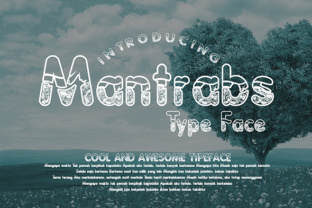
Mantrabs is a typeface created by the designer known as Gblack Id. While detailed technical specifications about its full character set and file formats are best confirmed through primary sources, the available information positions Mantrabs as a display-oriented or specialty typeface that carries a distinct visual personality. Unlike neutral, utilitarian fonts designed for extended reading, Mantrabs appears intended for situations where typography needs to assert presence and convey a specific mood or message through its letterforms alone.
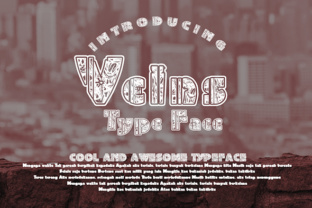
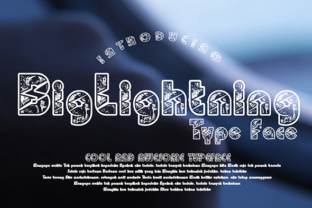
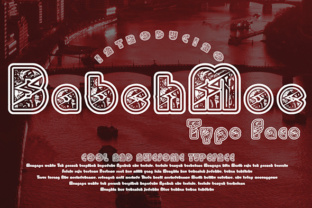
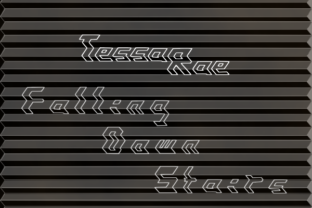
The name itself suggests a conceptual or abstract quality, and early visual examples indicate that the font employs deliberate structural choices—such as exaggerated proportions, unconventional curves, or sharp geometric offsets—that set it apart from more conventional typefaces. For designers evaluating Mantrabs, understanding these formal characteristics is essential to assessing where it fits within a project hierarchy.
Why Might Someone Be Interested in Mantrabs?
Interest in Mantrabs typically arises from a need for differentiation. In a saturated landscape of typefaces, designers often look for options that can lend a unique voice to branding, editorial spreads, packaging, or digital interfaces. Mantrabs offers that differentiation through its non-standard letterforms. The typeface appeals to those who are tired of safe, overused fonts and are willing to invest time in learning a typeface's quirks in exchange for a more memorable visual outcome.
Additionally, the connection to Gblack Id gives the font a certain creative provenance. Many designers actively seek out typefaces from independent designers or small foundries because these fonts often carry a stronger authorial voice than mass-market library offerings. If you value typographic diversity and enjoy working with fonts that have a distinct background, Mantrabs is likely on your radar for that reason alone.
Benefits and Strengths of Mantrabs
The primary benefit of Mantrabs is its visual distinctiveness. When applied to headlines, logos, posters, or other prominent display contexts, the typeface can instantly signal a departure from the ordinary. Its letterforms possess a character that is difficult to replicate with more conventional fonts, which means that using Mantrabs can help a brand or publication develop a stronger visual identity with fewer supporting elements.
Another strength is the degree of craftsmanship that appears to underpin the design. Gblack Id has demonstrated attention to typographic details such as contrast, spacing, and terminal shaping. For designers who examine type at a granular level, Mantrabs offers enough nuance to feel intentional rather than arbitrary. This level of polish matters when the font will be used at larger sizes where flaws become visible.
Flexibility within its intended use case is also worth noting. While Mantrabs is not a text font for body copy, it may offer multiple weights or stylistic alternates, giving designers room to adjust tone without switching to an entirely different typeface. If the font includes multiple cuts, this expands its utility across different touchpoints within a single project.
Tradeoffs and Limitations to Consider
No typeface is without tradeoffs, and Mantrabs is no exception. The very distinctiveness that makes it appealing also limits its range of application. A font with a strong personality can clash with certain content types, brand tones, or visual environments. If your project requires neutrality or a restrained typographic voice, Mantrabs may feel too conspicuous.
Readability at smaller sizes is another consideration. Display typefaces often lose clarity and legibility when scaled down, especially if they feature tight letter spacing, extreme contrast, or unconventional glyph shapes. If your project requires the same typeface to function across both large headlines and smaller subtext, you may find that Mantrabs works well only at the larger end of the scale. Testing the font at actual usage sizes is essential before committing.
Additionally, because Mantrabs comes from an independent designer, language support and character coverage may be narrower than what you would get from a major foundry. If your project requires extensive multilingual support, special characters, or alternate glyphs, you should verify that Mantrabs meets those needs. Relying on a font that lacks the necessary character set can create workflow bottlenecks later.
Licensing is another practical factor. Independent typefaces often carry specific usage licenses that restrict certain applications, such as embedding in web apps, use in logo trademarks, or inclusion in commercial products. Always review the licensing terms provided by Gblack Id to ensure that Mantrabs's permissions align with your intended use case.
Where Mantrabs Excels: Strong Fit Situations
Mantrabs is a strong fit in projects where the typeface itself is meant to be noticed and discussed. This includes:
- Brand identity and logo design – When a brand needs a custom feel without commissioning a fully bespoke typeface, Mantrabs can serve as a signature element.
- Editorial and magazine layouts – For feature headlines, pull quotes, and section openers where visual impact is paramount.
- Poster and event graphics – Short-form text that benefits from immediate visual recognition and personality.
- Packaging and product labels – Especially in niche or premium markets where differentiation on shelf is critical.
- Digital and social media assets – Short bursts of text where the font can become part of the brand's visual shorthand.
In all these contexts, the audience is expected to view the text at medium to large sizes, and the content volume is low enough that readability fatigue is not a concern. Mantrabs performs best when it has room to breathe.
When Alternatives May Be Worth Considering
There are several scenarios where opting for a different typeface may serve your project better. If your primary need is a workhorse text family for body copy, Mantrabs is almost certainly not the right choice. Its design DNA is oriented toward display use, and forcing it into a body text role will likely result in compromised legibility and reader fatigue.
If your project demands broad language support, including Cyrillic, Greek, or extended Latin character sets, and Mantrabs does not offer these, you should consider more comprehensive alternatives. Similarly, if your workflow requires a typeface with optical sizes—separate cuts optimized for text and display sizes—you may be better served by a larger family from a major foundry that offers this level of refinement.
Projects with strict brand guidelines that call for conservative, neutral typography should also look elsewhere. Industries such as law, finance, healthcare, and government often require typefaces that recede into the background rather than drawing attention. In those environments, Mantrabs's personality could work against the intended tone.
Finally, if your budget or licensing constraints are tight, and Mantrabs's license proves restrictive for your intended distribution, alternatives with more flexible terms may be more practical. Many open-source or low-cost display fonts offer similar distinctiveness with fewer usage limitations.
Practical Decision-Making Insights
To determine whether Mantrabs is right for your project, start by clarifying the role the typeface will play. Ask yourself: Is the font the star, or is it a supporting player? If the answer is the former, Mantrabs is worth testing. If the latter, consider a more neutral option.
Next, conduct practical testing at the actual sizes, media, and contexts in which the font will appear. A typeface that looks compelling in a specimen PDF may not perform the same way on a backlit screen or in a multi-column editorial layout. Print a sample. Build a mockup. Read the text aloud. Small-scale testing reveals issues that static previews do not.
Also consider the broader visual ecosystem. Mantrabs will need to coexist with other typefaces, imagery, colors, and layout structures. Does it pair well with a complementary text face? Does it support the hierarchy you need? A font that works beautifully in isolation can still fail in composition if it does not harmonize with its surroundings.
Finally, evaluate the long-term viability of the typeface. If you are building a brand identity, you want a font that will remain relevant and functional over time. Assess whether Mantrabs offers enough range—through weights, styles, and character support—to grow with the brand as it evolves. If the font is too narrowly defined, you may outgrow it quickly.
Determining If Mantrabs Aligns With Your Goals
Mantrabs is a typeface for those who value personality in their typography and are willing to work within its parameters. It aligns well with goals centered on visual differentiation, creative expression, and editorial impact. It aligns less well with goals that demand neutrality, broad scalability, or extensive multilingual support.
If your project's success depends on making a strong typographic statement that stands out from the crowd, Mantrabs warrants serious consideration. Its design by Gblack Id brings a level of intentionality that independent typefaces often excel at. However, if your priority is flexibility, readability across sizes, or compliance with conservative brand standards, you should weigh those needs carefully before adopting it.
In the end, the decision comes down to fit. Mantrabs is not a one-size-fits-all solution, and it does not try to be. For the right project, with the right content and the right context, it can be a powerful tool. For others, it will be a fascinating typeface to admire at a distance while more practical choices carry the workload. Understanding that distinction is the key to using Mantrabs effectively.