Hot Chips: A Thoughtful Choice for Strategic Brand Communication
When you begin evaluating design assets for your next project, fonts often receive less strategic attention than they deserve. Hot Chips, a handcrafted font created by Creativeqube, is one of those typefaces that invites a closer look—not because it is flashy or trendy, but because it embodies a deliberate approach to visual communication. In a landscape filled with generic sans-serif options, a font that has been carefully crafted by hand offers something fundamentally different: personality, nuance, and a sense of intention. For entrepreneurs, marketers, and creators who prioritize authenticity and clarity in their messaging, understanding what Hot Chips brings to the table can influence how you plan your design systems, position your brand, and connect with your audience over the long term.
Why Typography Decisions Deserve More Strategic Consideration
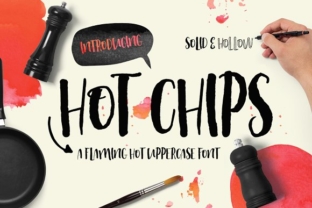
Every font you choose sends a signal. That signal can reinforce or undermine the goals you have set for a project, a campaign, or an entire business. Hot Chips is not merely a decorative option; it is a tool that carries distinct visual characteristics—rounded forms, irregular edges, and a hand-drawn quality—that communicate warmth, approachability, and craftsmanship. When you align these qualities with your intended outcomes, you move beyond random selection and into intentional design. For a freelancer building a personal brand, Hot Chips can convey a sense of bespoke service. For a small business owner developing packaging, it can suggest artisanal care. The strategic value of this font lies in its ability to make abstract values like “authenticity” or “creativity” tangible through visual form.
Aligning Hot Chips with Your Goals and Positioning
Before integrating Hot Chips into any project, clarify what you want your audience to feel and remember. If your goal is to build trust through a sense of human touch, this font supports that objective naturally. Consider how you position yourself against competitors: if others rely on cold, corporate typography, using Hot Chips for headlines or key messaging can differentiate you. However, the alignment must be purposeful. A financial advisory firm, for example, might find Hot Chips too casual for formal reports, but could use it sparingly in internal communications or collateral aimed at a younger demographic. The same font that signals warmth in one context can appear unprofessional in another, so matching the tone to your audience’s expectations is essential. Planning for this alignment early—during the branding or campaign strategy phase—helps you avoid mismatches that confuse or alienate your audience.
Practical Considerations Before Relying on Hot Chips
Using Hot Chips effectively requires attention to context and execution. Because it is handcrafted, its irregularities can add character but may reduce legibility in small sizes or long blocks of text. Test it at multiple scales—from a large banner headline to a mobile screen—to ensure readability remains high. Consider the medium: for print materials like posters or packaging, the tactile quality of Hot Chips can shine; for digital interfaces, especially dense dashboards or lengthy articles, it may fatigue readers. Another factor is pairing. Hot Chips works best when balanced with a more neutral font for body copy, such as a clean sans-serif or a simple serif. This contrast creates hierarchy without overwhelming the viewer. A practical approach is to use Hot Chips for primary headers, call-to-action buttons, or brand elements that require emphasis, while reserving simpler fonts for navigation, paragraphs, and supporting information. Planning these pairings in advance prevents the visual clutter that arises from mixing too many distinct typefaces.
Using Hot Chips to Enhance Communication and Customer Experience
Strategic use of Hot Chips can improve how your message is received. Because it looks hand-drawn, it can convey effort and care—qualities that resonate in customer-facing touchpoints. For example, a blogger might use Hot Chips for post titles to create a recognizable, inviting tone. An educator could employ it on course materials or worksheets to make learning feel less formal and more engaging. A product creator might feature it on limited-edition packaging to signal exclusivity. In each case, the font becomes part of the experience, not just decoration. However, consistency matters. If you use Hot Chips in one channel but not others, the brand identity can feel fragmented. Decide upfront where this font will appear—email headers, social media graphics, landing pages—and apply it uniformly. This intentional repetition builds familiarity and strengthens the emotional connection with your audience over time.
Planning Your Typography Strategy with Hot Chips
Incorporating Hot Chips into a broader typography system requires thought about hierarchy, contrast, and sustainability. Start by defining the role of this font in your visual language. Is it for hero text only? For accent elements like quotes or labels? For product names? Once its role is clear, establish guidelines for its use. For instance, specify minimum and maximum point sizes, color treatments, and spacing requirements. Document which contexts require the handcrafted feel and which do not. This planning is particularly valuable for small business owners and marketers who may be working with a team or scaling their brand. Without guidelines, use of Hot Chips can become inconsistent, leading to a diluted message. Additionally, consider the longevity of the font. Trends in typography shift, but a handcrafted font like Hot Chips can remain relevant if it is tied to core brand values rather than fleeting aesthetics. If those values—such as craftsmanship or personal connection—are durable, the font will continue to serve your goals.
Long-Term Value and Risks of Context-Free Use
The most significant risk of using Hot Chips without clear goals is that it may communicate something unintended. A font that looks playful could undermine a serious message. A font that seems handmade might appear amateurish in a context where polish is expected. These risks emerge when the font is chosen for its appearance alone, without considering the audience’s perception or the desired outcome. To mitigate this, always test your materials with a sample of your target audience. Ask for feedback on tone: does the font feel trustworthy, creative, or distracting? Another risk is overuse. When Hot Chips appears everywhere—on every headline, every button, every label—it loses its impact. Reserve it for moments where emphasis matters. Using it sparingly increases its perceived value. Long-term, the font can become a signature element that customers associate with your quality and attention to detail, but only if it is deployed with discipline. Revisit your font strategy annually as your brand evolves, adjusting the role of Hot Chips as needed to stay aligned with your current positioning.
Making Intentional Choices with Hot Chips in Your Projects
Ultimately, the value of Hot Chips depends on how thoughtfully you integrate it into your broader plan. Start by asking: what outcome am I trying to achieve with this piece of communication? Is it to build trust, evoke nostalgia, signal innovation, or something else? Then evaluate whether the handcrafted, approachable nature of Hot Chips supports that outcome. For example, a freelancer promoting a new service might use Hot Chips in a launch video title to convey a personal touch, while a publisher redesigning a newsletter might use it for section headers to add visual rhythm without compromising readability. In each case, the font serves a defined purpose. Document the decisions you make—why you chose Hot Chips, where you applied it, and what results you observed. This record helps you refine your approach over time and avoid repeating mistakes. By treating typography as a strategic resource rather than a last-minute design choice, you position your projects for better communication, stronger brand recognition, and more effective engagement with your audience.
Hot Chips is more than a typeface—it is a design asset that, when used with intention, can elevate your work from ordinary to memorable. The key lies not in the font itself, but in the planning, testing, and consistency you bring to its use.